BRICKWORKS & POTTERIES OF THE IPSWICH (Qld) REGION
Alister J Cameron
Claypave: Kilns
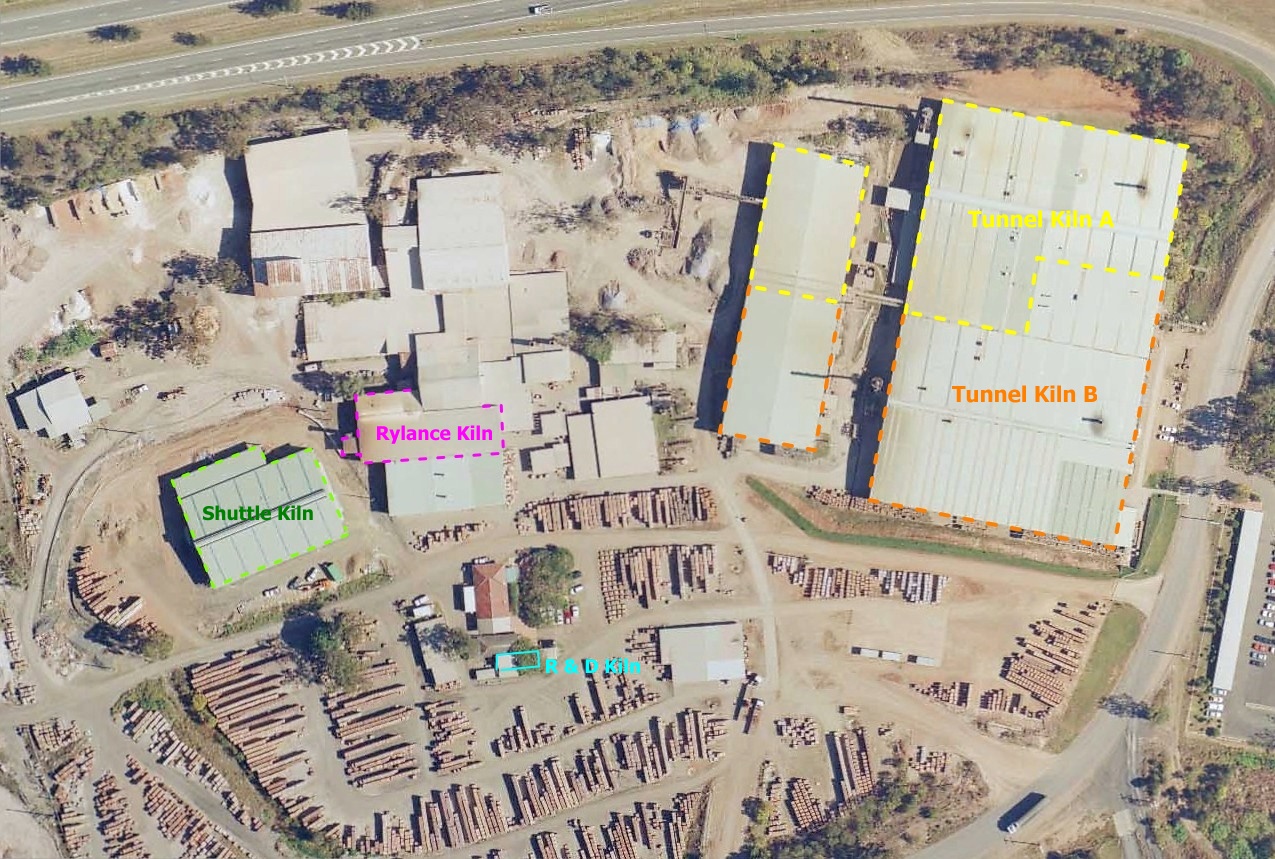
AERIAL PHOTO OF BRICKWORKS IN 2000 SHOWING ALL MODERN KILNS
Build Years:
(A) Research & Development Kiln, 1970s or earlier; (B) Rylance Kiln, 1970s; (C) Tunnel Kiln A 1988; (D) Tunnel Kiln B 1994; (E) Shuttle Kiln, completed 2001.
Source: QImagery
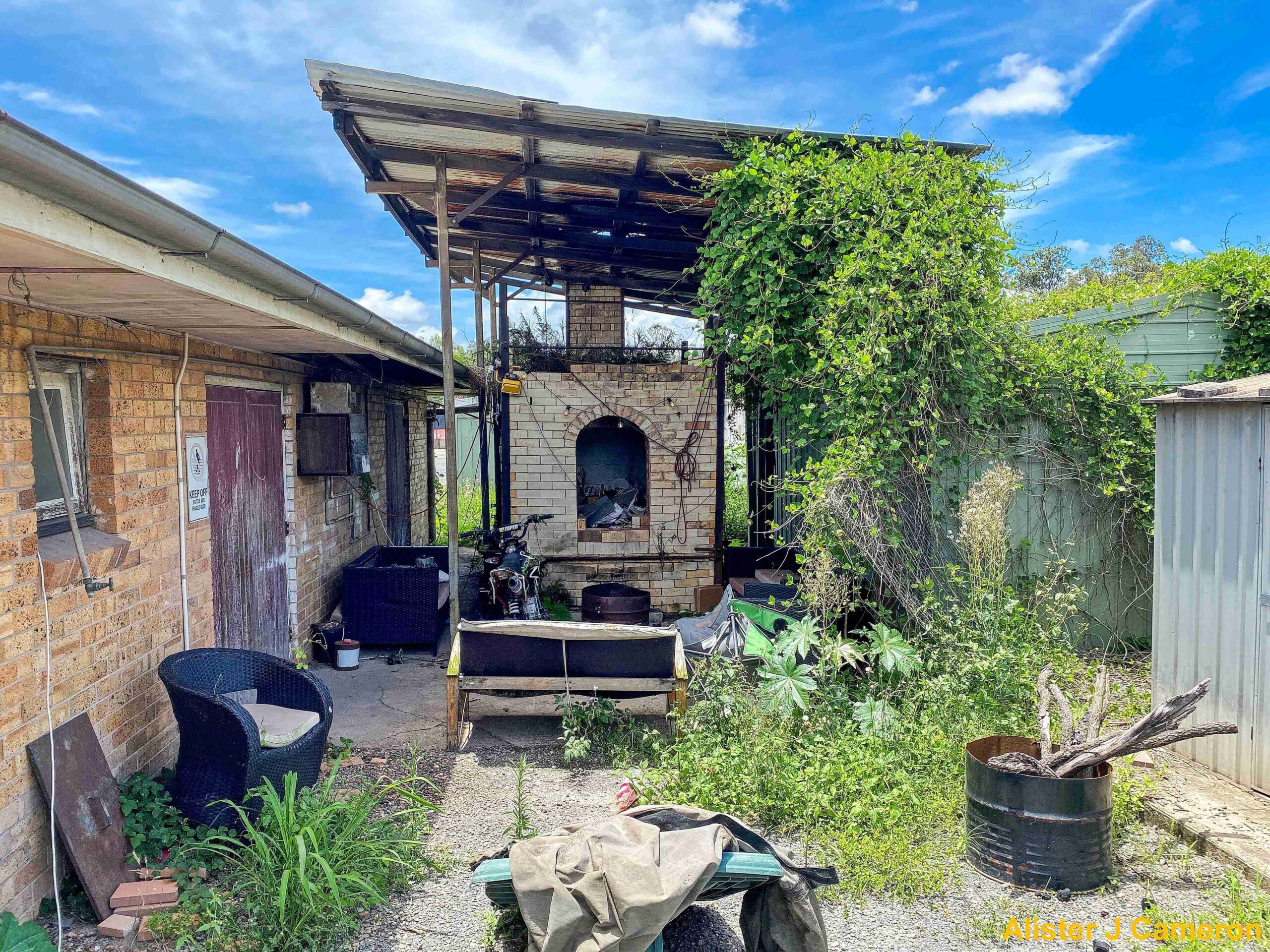
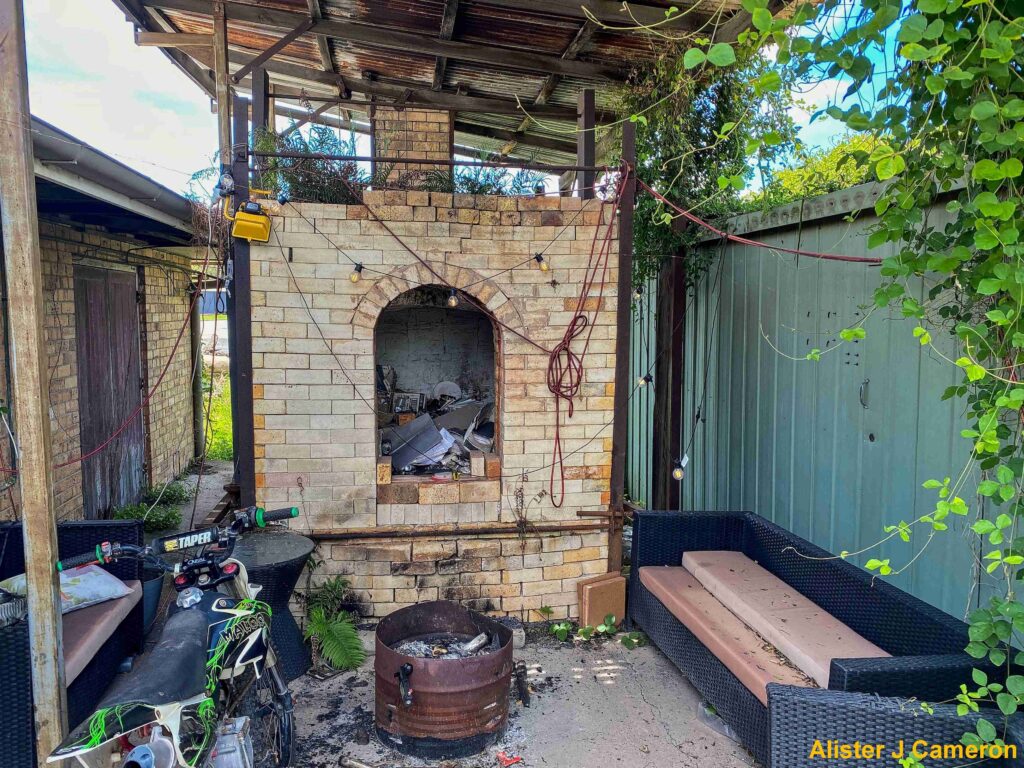
The Research & Development Kiln (See separate page)
The Former Rylance Kiln
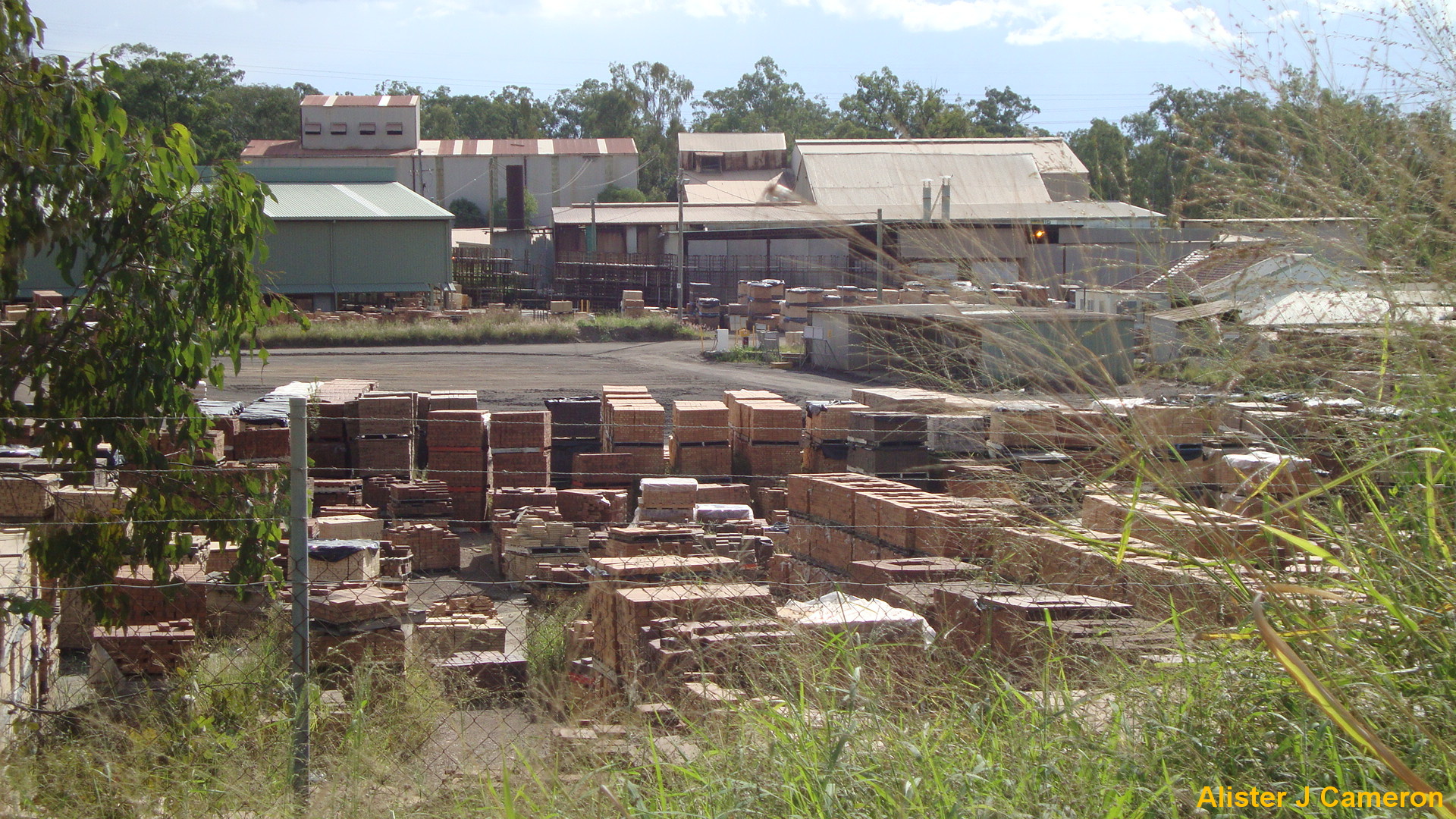
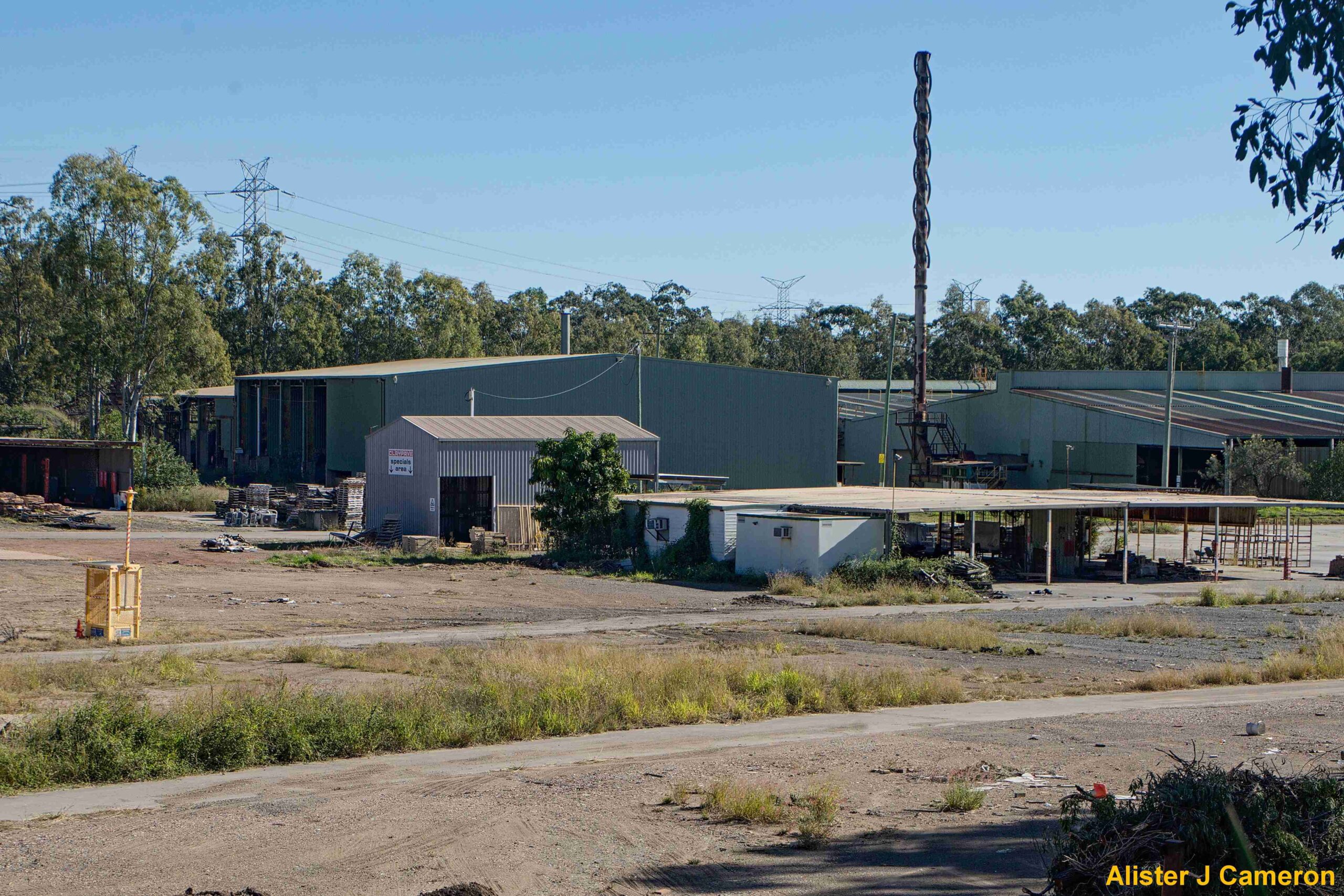
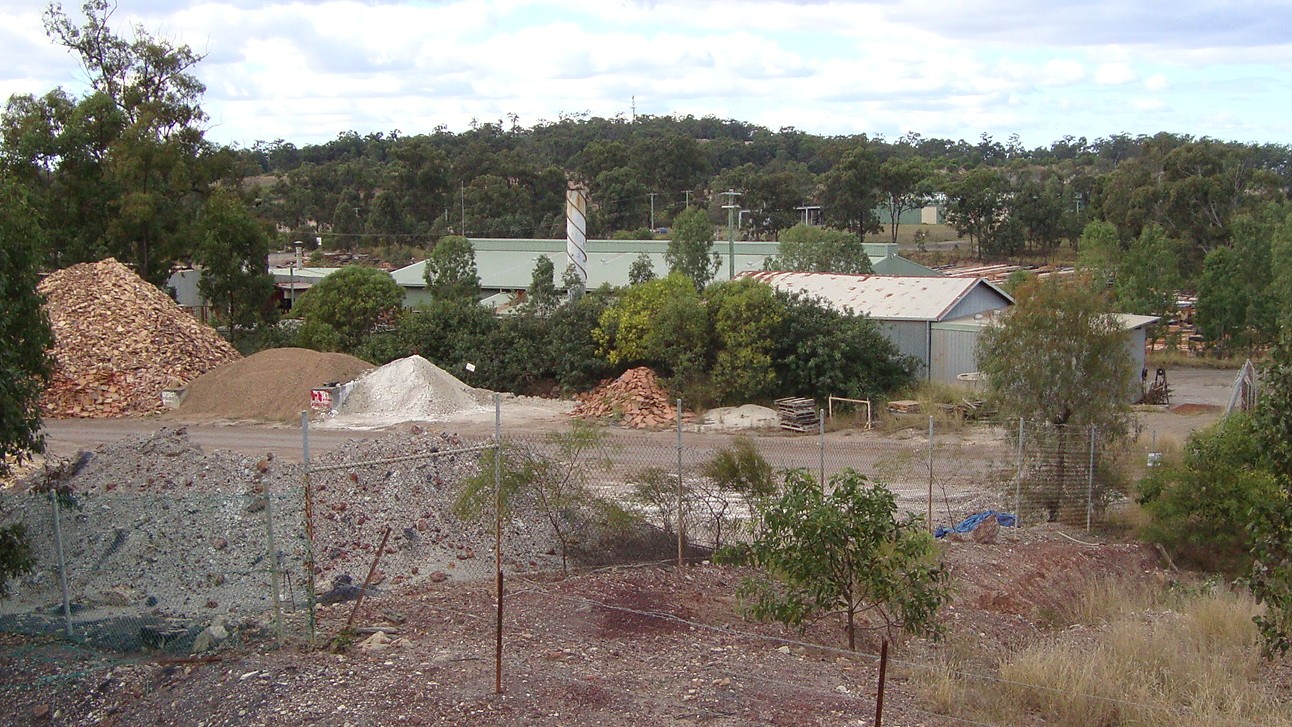
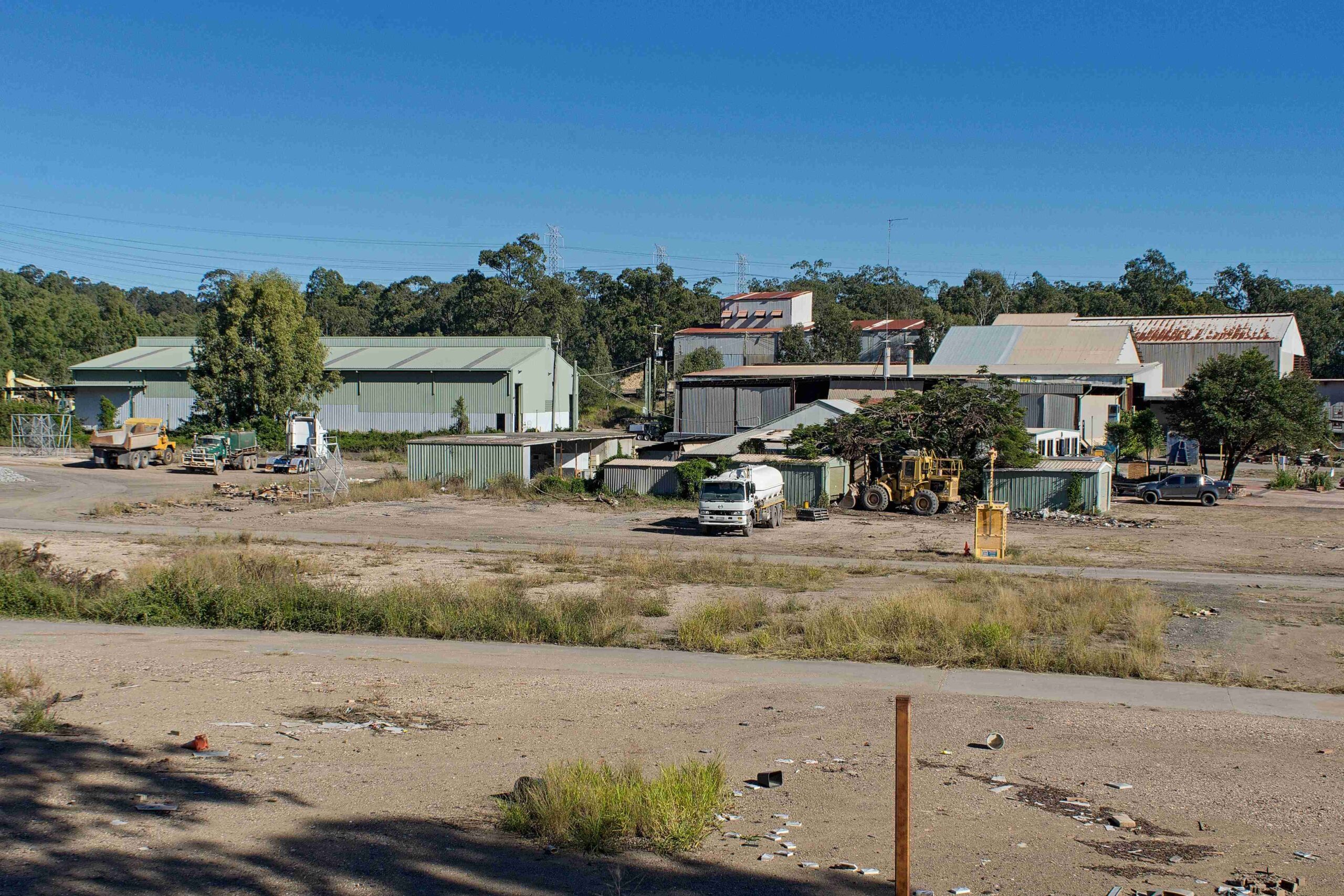
THE BRICKWORKS COMPLEX VIEWED FROM THE EAST 2011
A number of the older buildings can be seen.
This includes a large kiln in the middle distance, marked by a large chimney.
Photo: Alister J Cameron
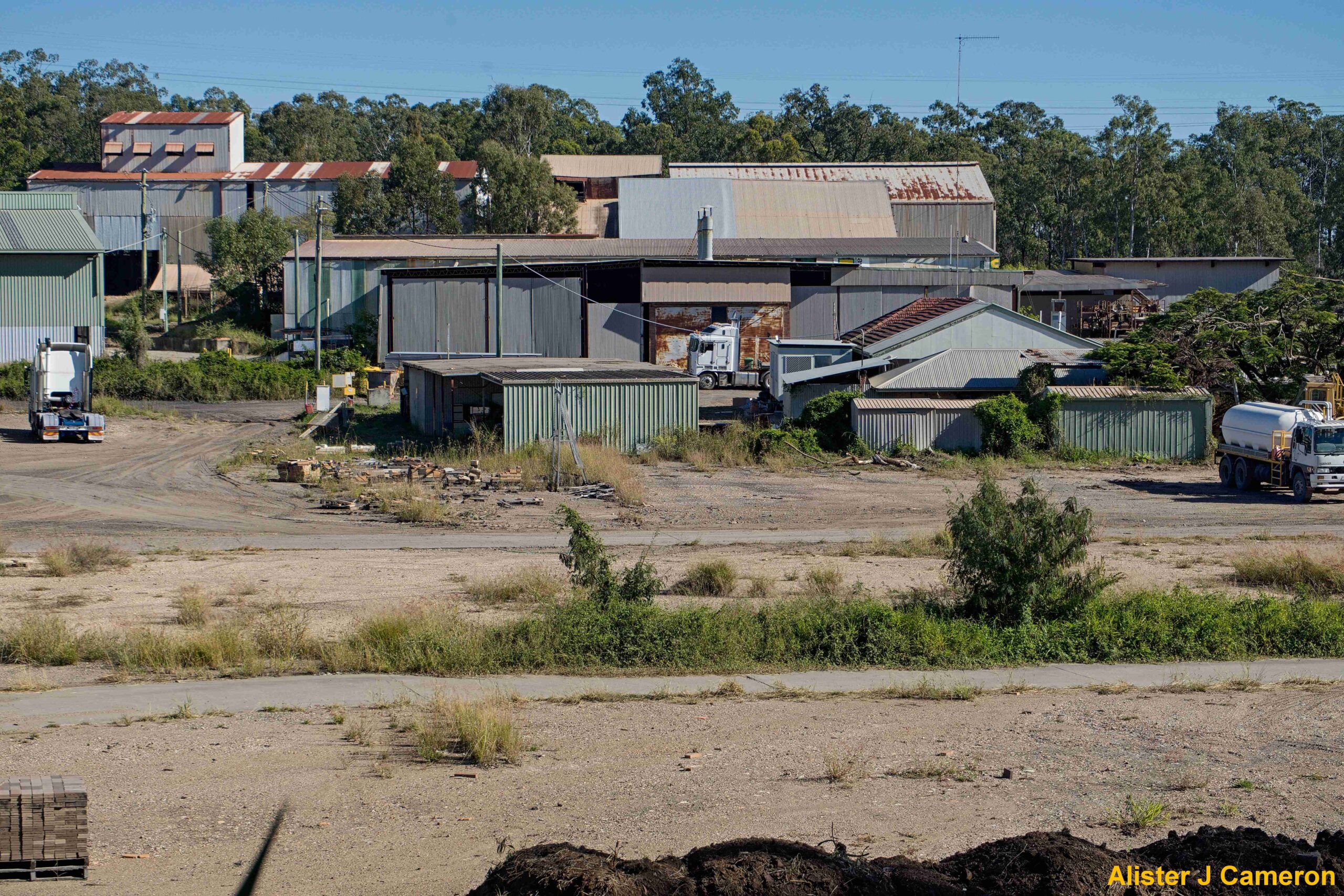
THE KILN SITE IN 2021
The yard is virtually empty and the kiln has gone. What remains is an ordinary shed.
Photo: Alister J Cameron
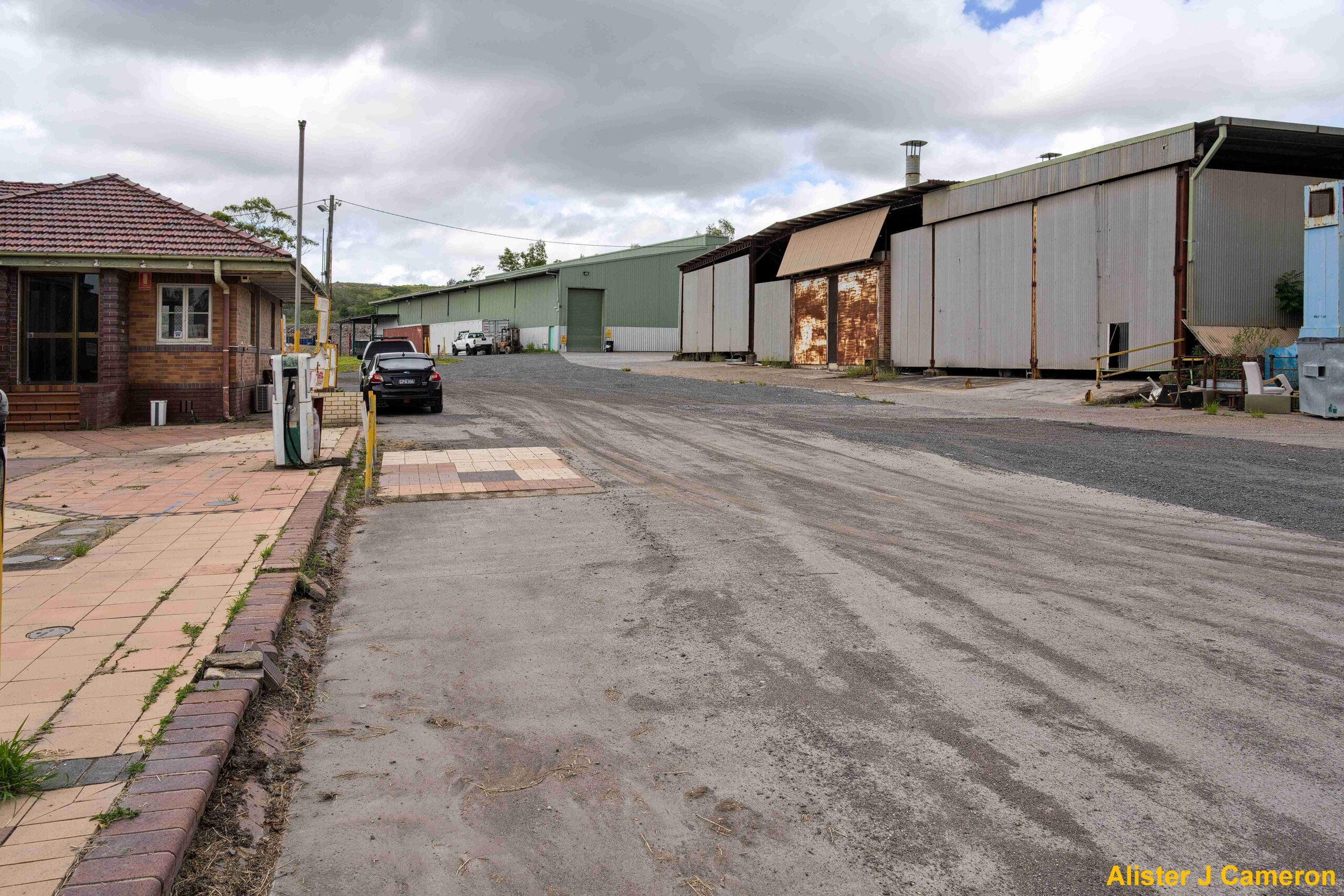
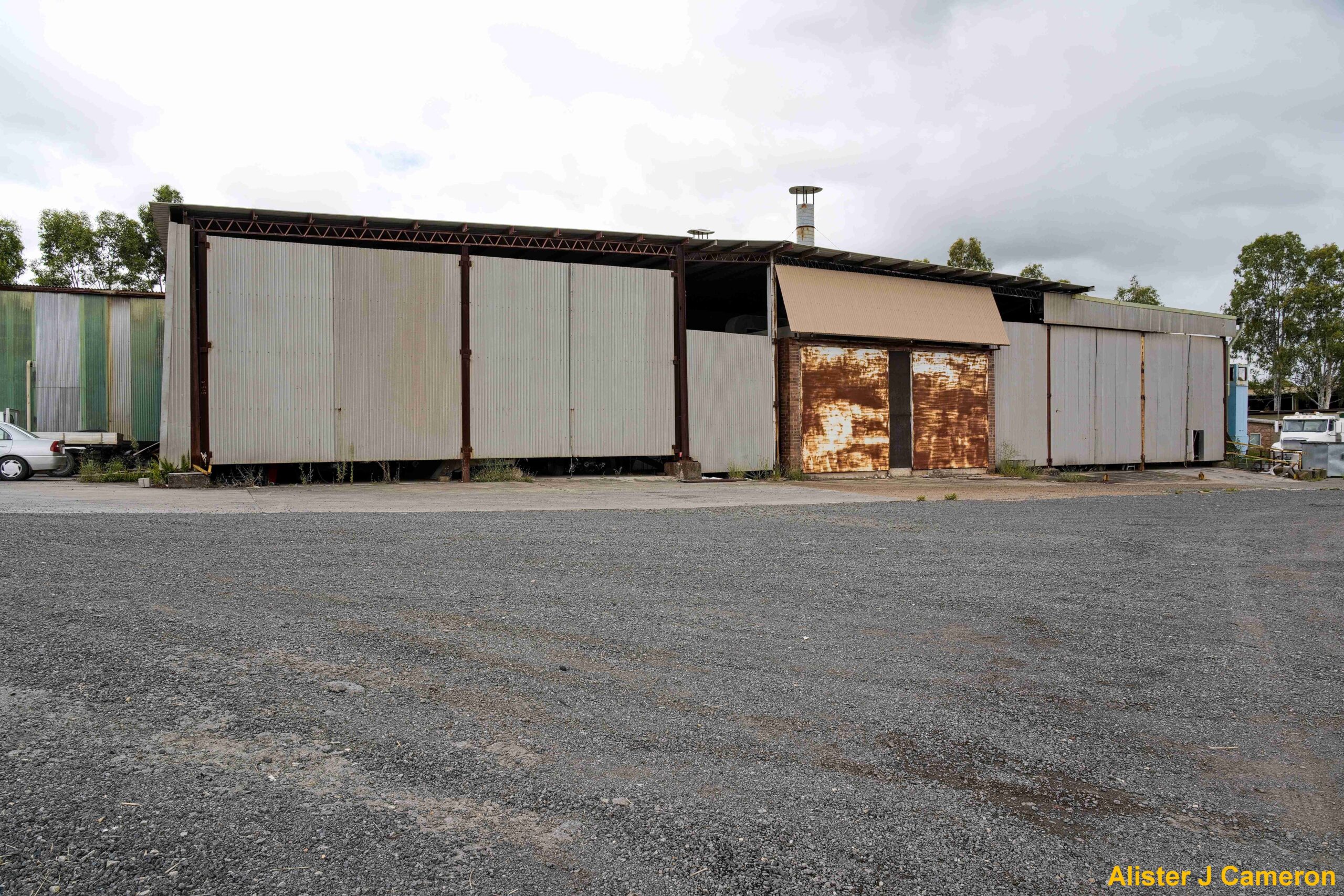
DIRECTLY OPPOSITE THE OFFICE IS THE SHED WHERE THE KILN WAS PREVIOUSLY HOUSED 2024
Photo: Alister J Cameron
FROM ANOTHER ANGLE 2024
Photo: Alister J Cameron
The Tunnel Kilns
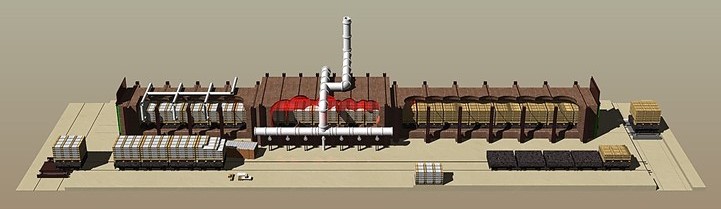
THEORETICAL DIAGRAMME OF HOW A TUNNEL KILN WORKS
Source: Wikipedia
A continuous kiln, sometimes called a tunnel kiln, is long with only the central portion directly heated.
From the cool entrance, ware is slowly moved through the kiln, and its temperature is increased steadily as it approaches the central, hottest part of the kiln. As it continues through the kiln, the temperature is reduced until the ware exits the kiln nearly at room temperature.
A continuous kiln is energy-efficient, because heat given off during cooling is recycled to pre-heat the incoming ware. In some designs, the ware is left in one place, while the heating zone moves across it.
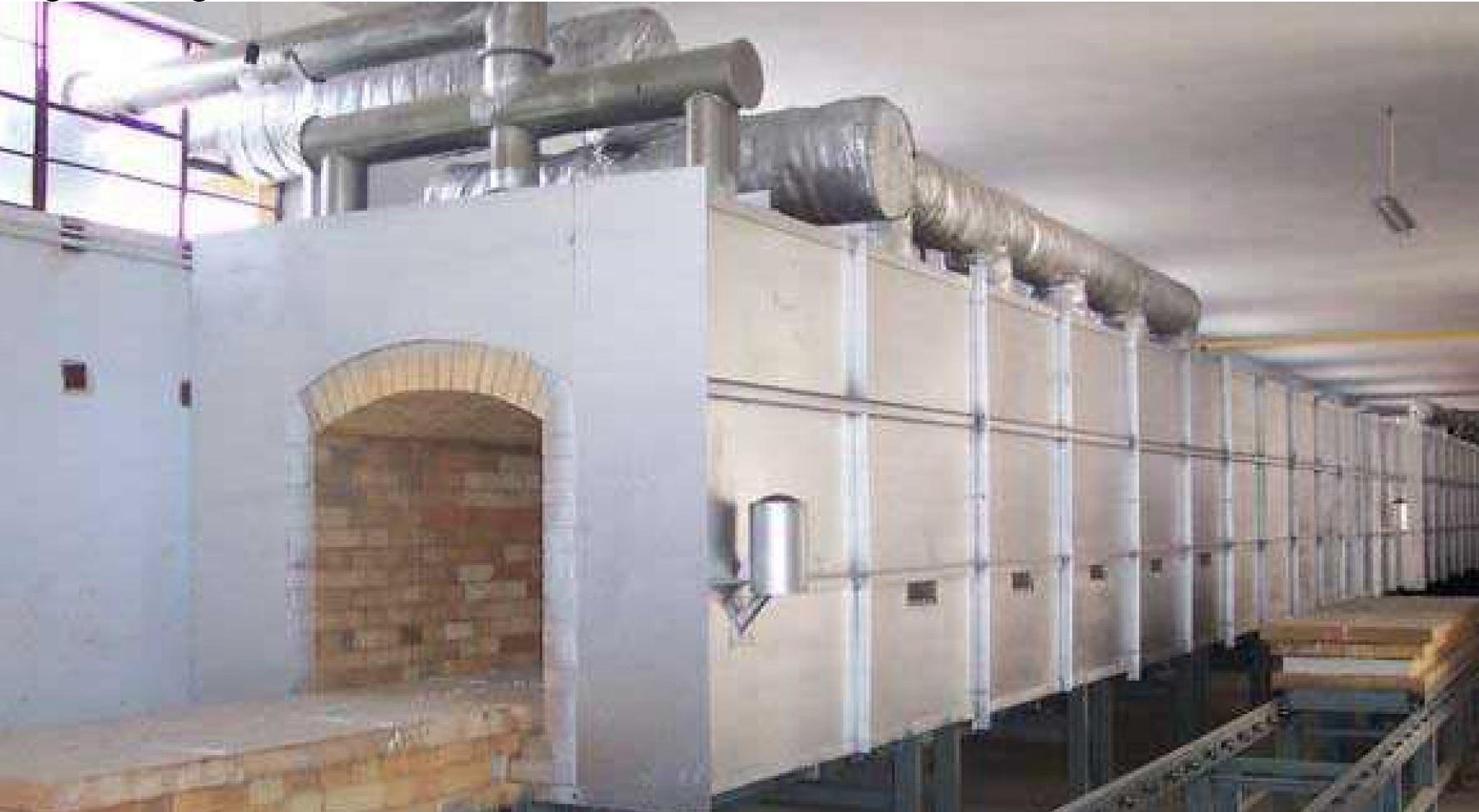
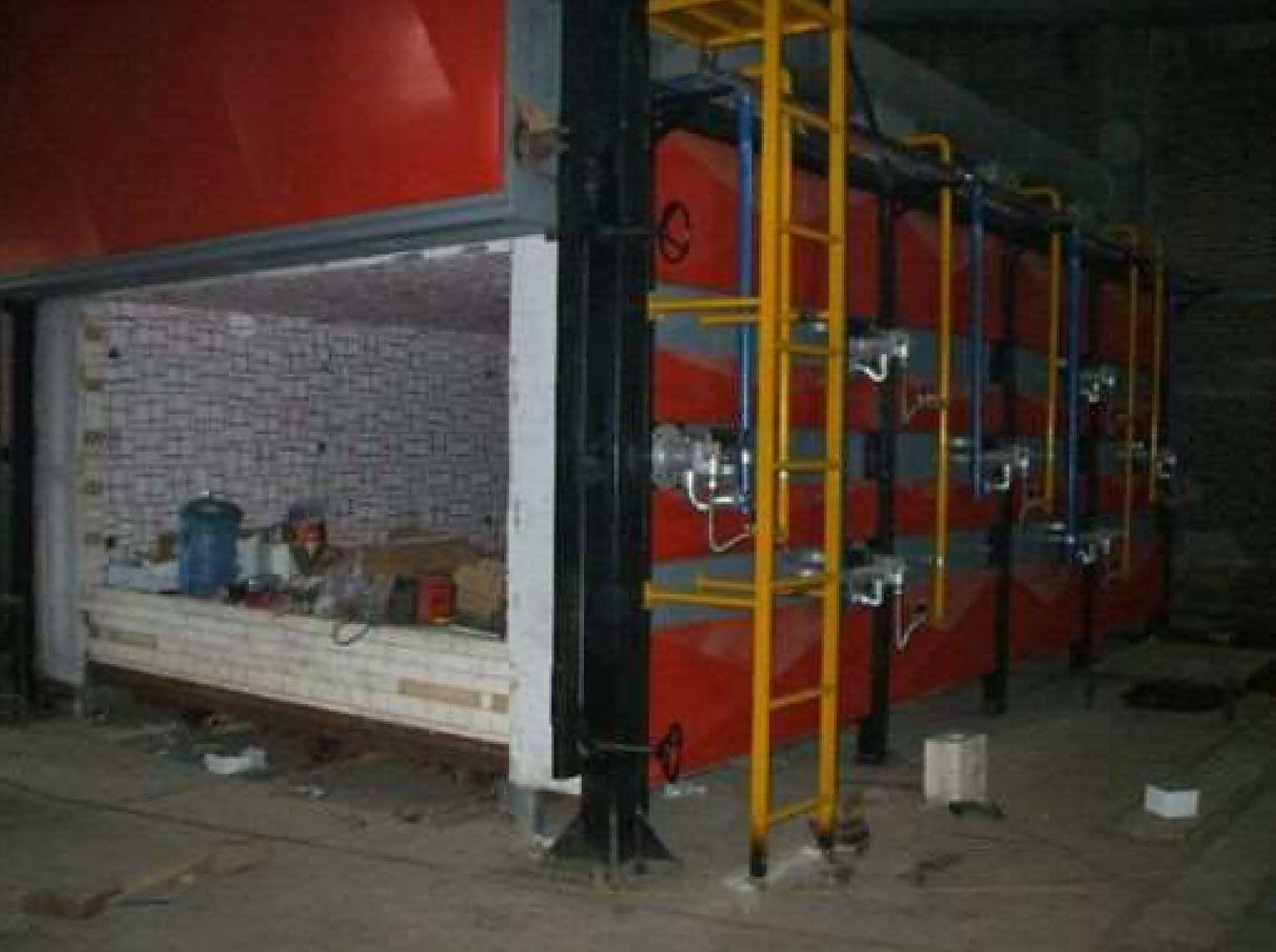
EXAMPLE OF A TUNNEL KILN
Source: https://www.ceceramicfiber.com/
NORTHERN SECTION OF BRICKWORKS 2021
On right-hand side is the gas kiln complex. At this point in time one of two main chimneys is still in place. On the left side is a large shed probably designed to cover clay stocks or other materials used for the kilns.
Photo: Alister J Cameron
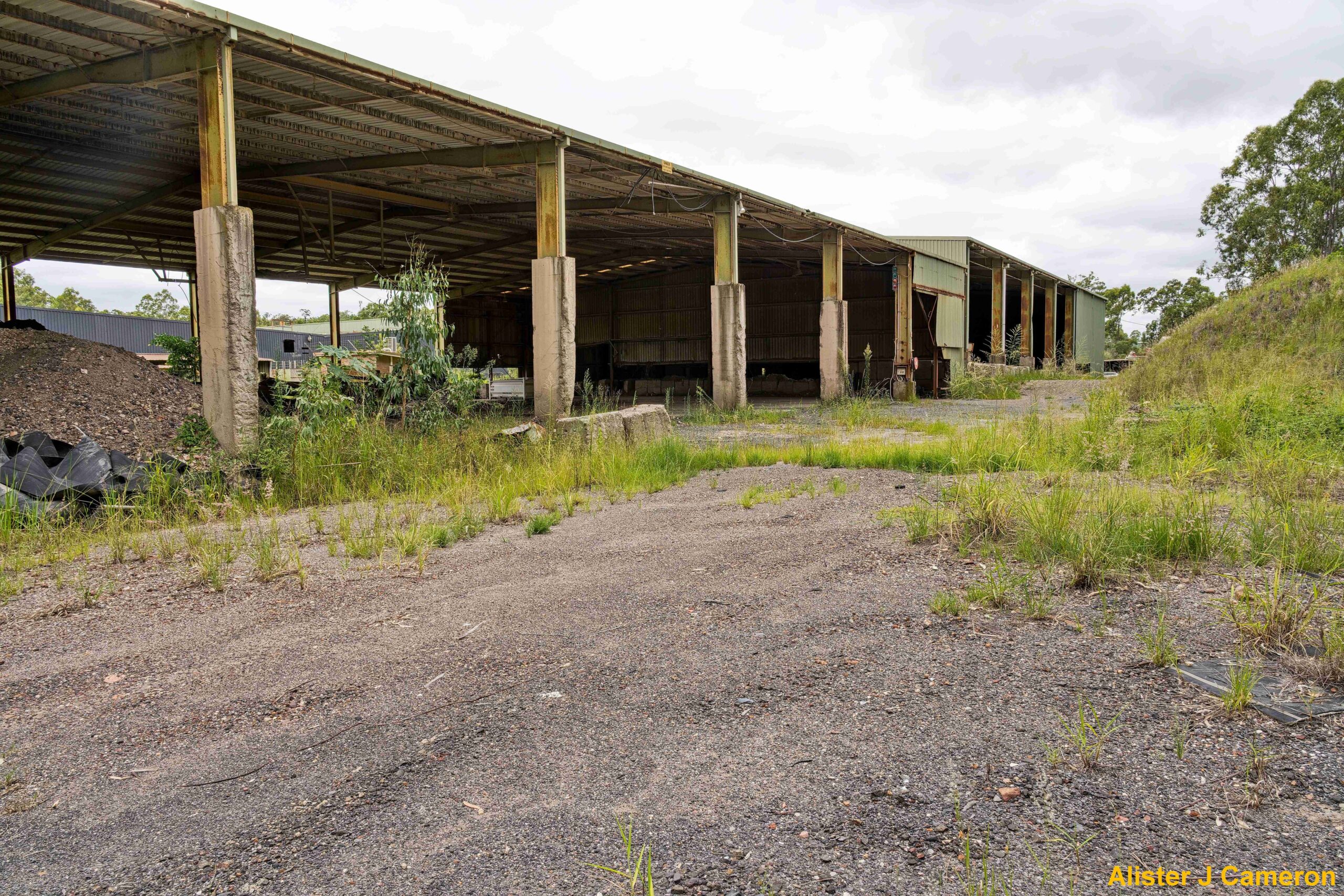
LARGE, OPEN SHED PROBABLY USED TO STORE UNDER COVER MATERIALS USED BY THE KILNS 2024
Photo: Alister J Cameron
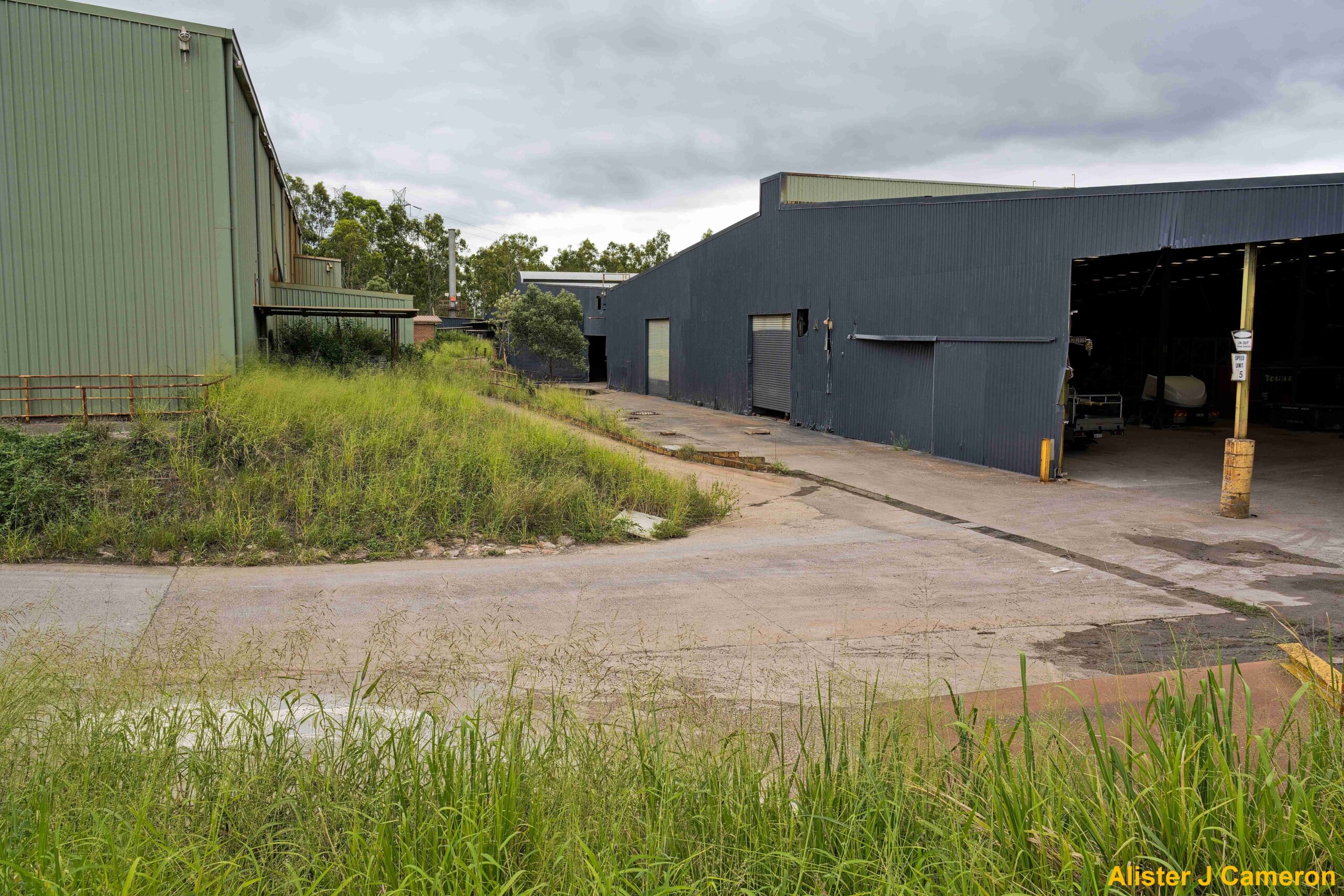
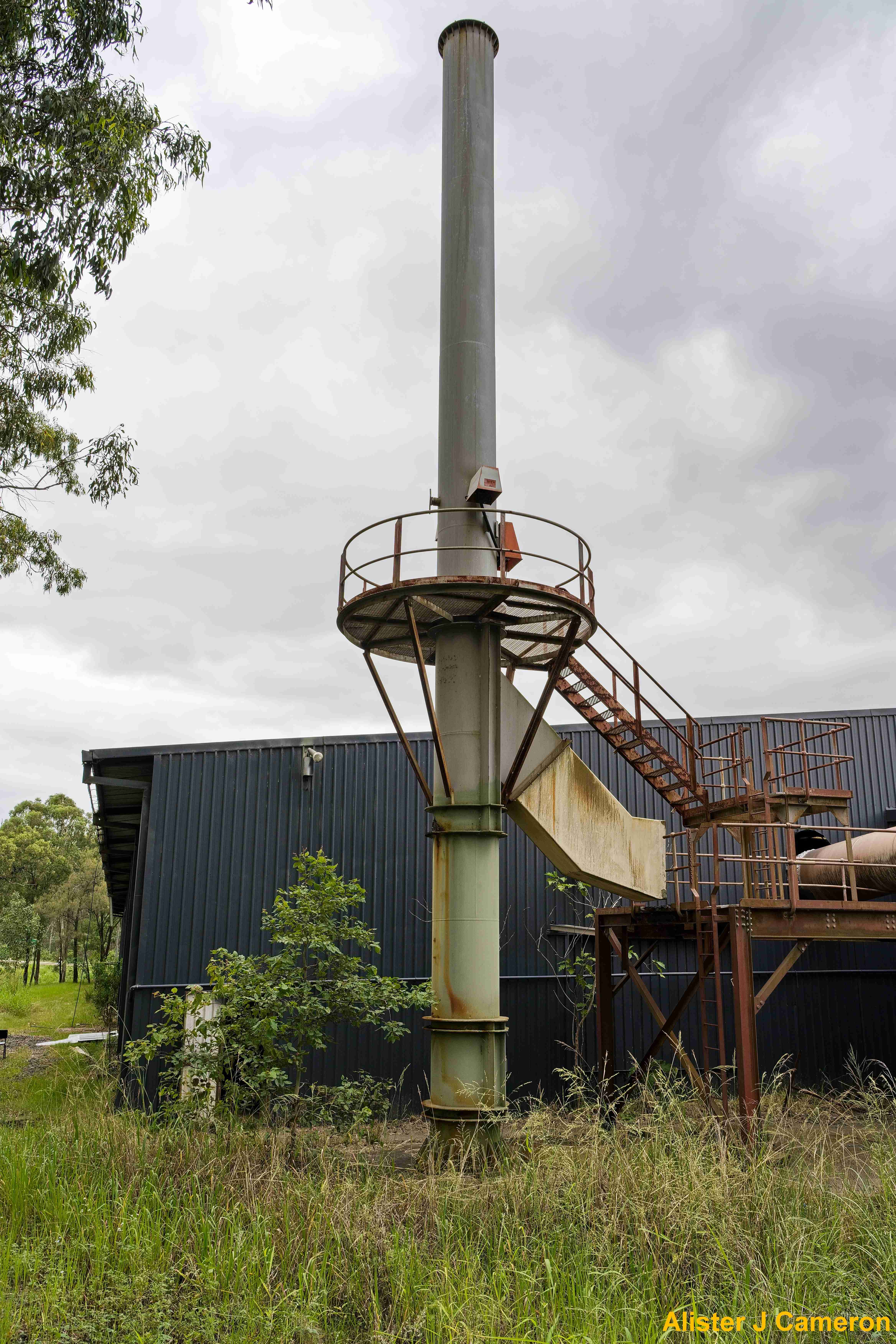
CLOSEUP OF THE AREA BETWEEN THE STORAGE SHED AND KILN BUILDING 2024
Of the two main chimneys: the shorter one at the rear is still intact. The taller one has been removed.
Photo: Alister J Cameron
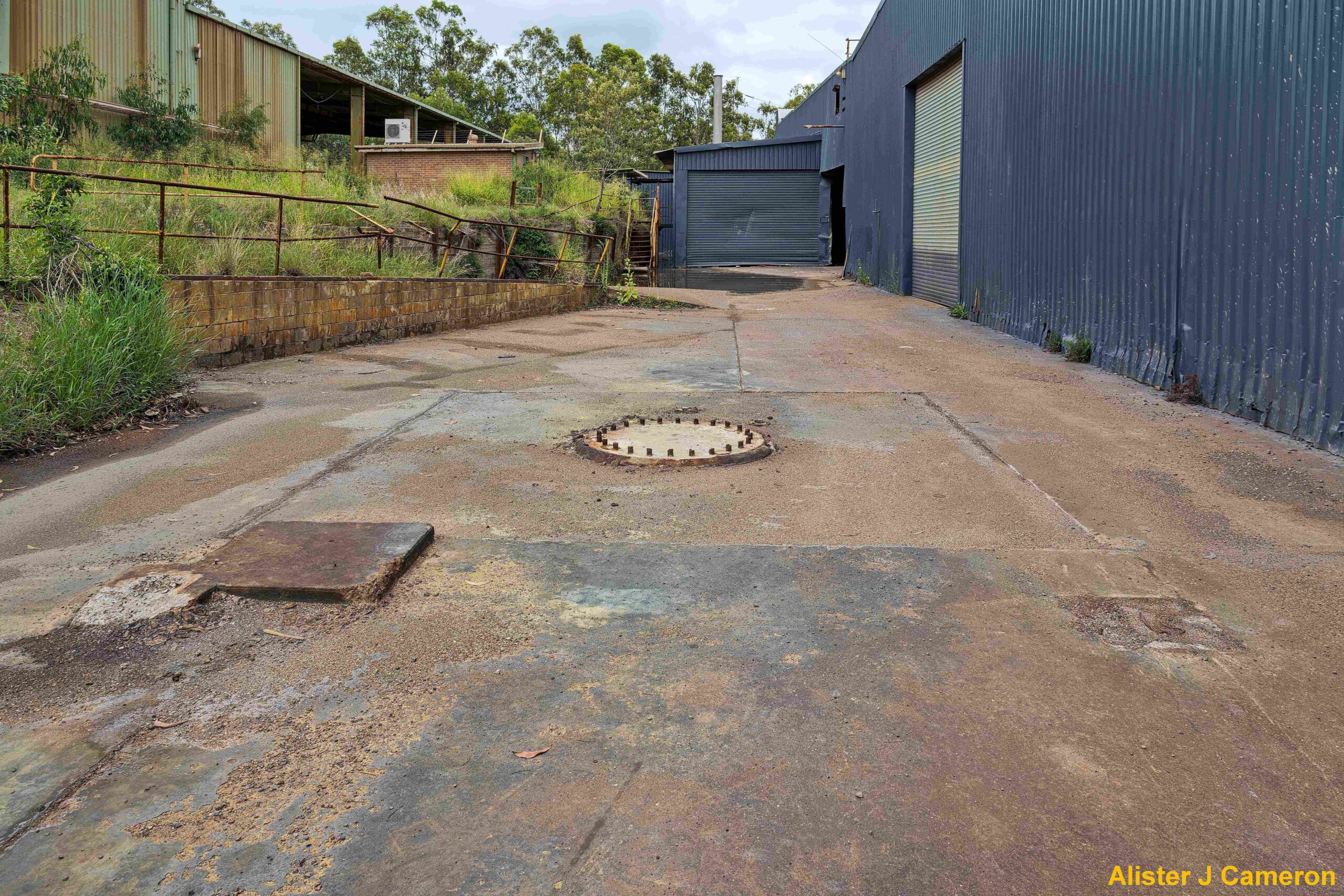
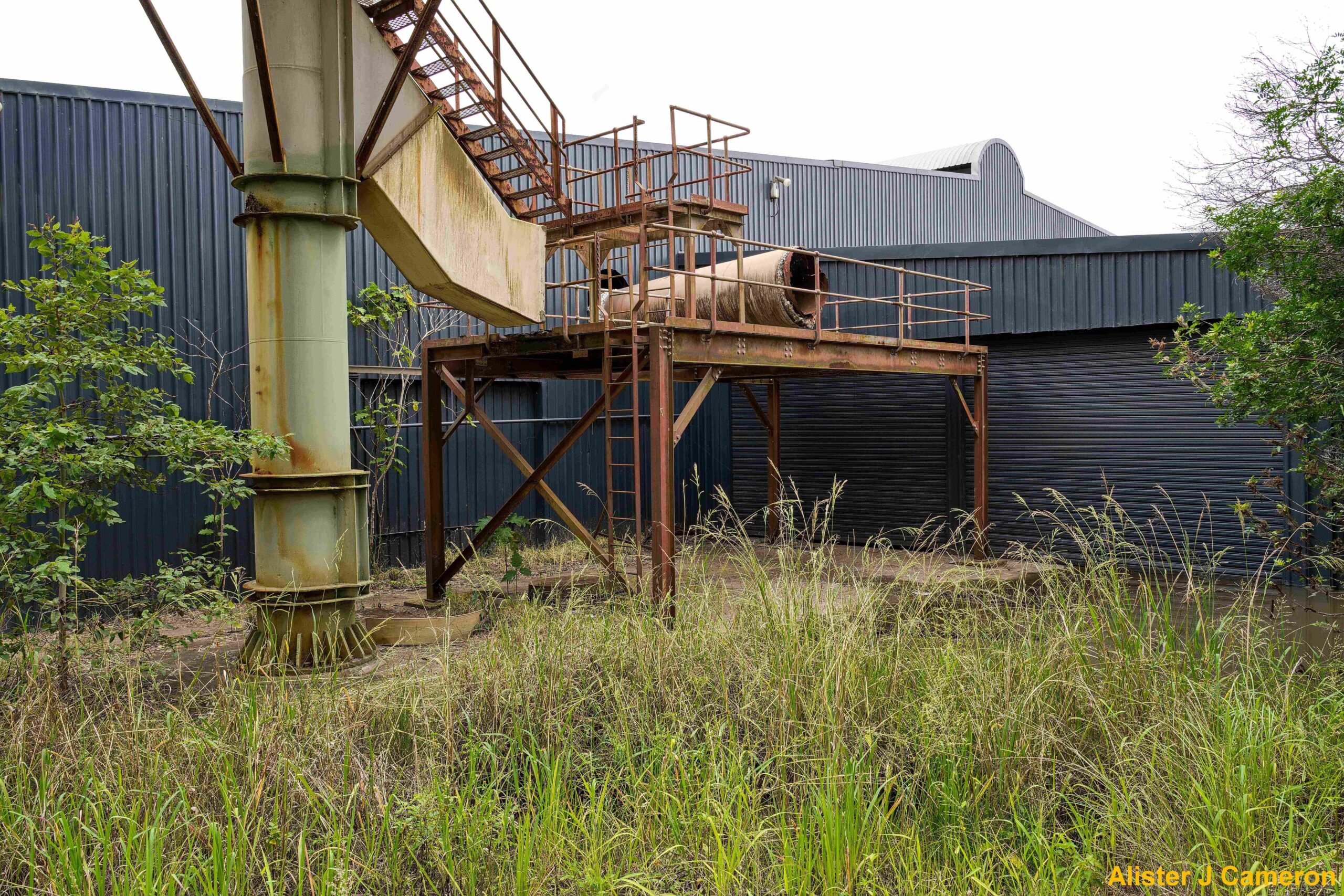
BASE OF REMOVED TALLER CHIMNEY 2024
Photo: Alister J Cameron
CLOSEUP 2025
The former connection with shed and kilns has been removed.
Photo: Alister J Cameron
LOOKING AT THE KILN BUILDING FROM A DIFFERENT ANGLE 2021
All signs of activity have now ceased.
Photo: Alister J Cameron
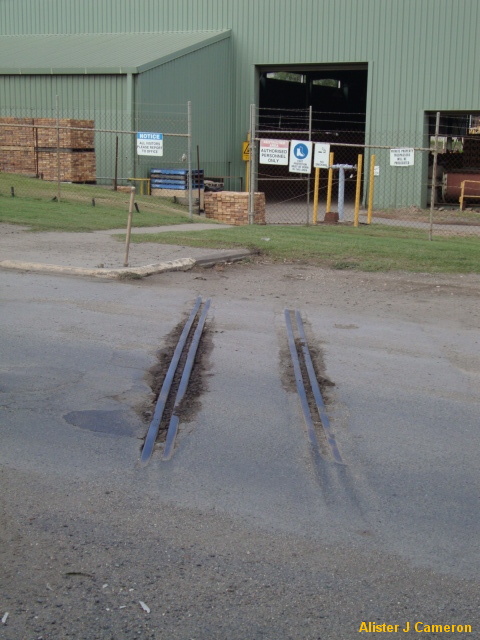
FURTHER BACK IN 2011 THE RAILS WERE STILL IN THE ROAD.
The building straddles the former allignment of the Brickworks Siding.
Photo: Alister J Cameron
LOOKING AT THE KILN BUILDING FROM A DIFFERENT ANGLE 2021
All signs of activity have now ceased.
Photo: Alister J Cameron
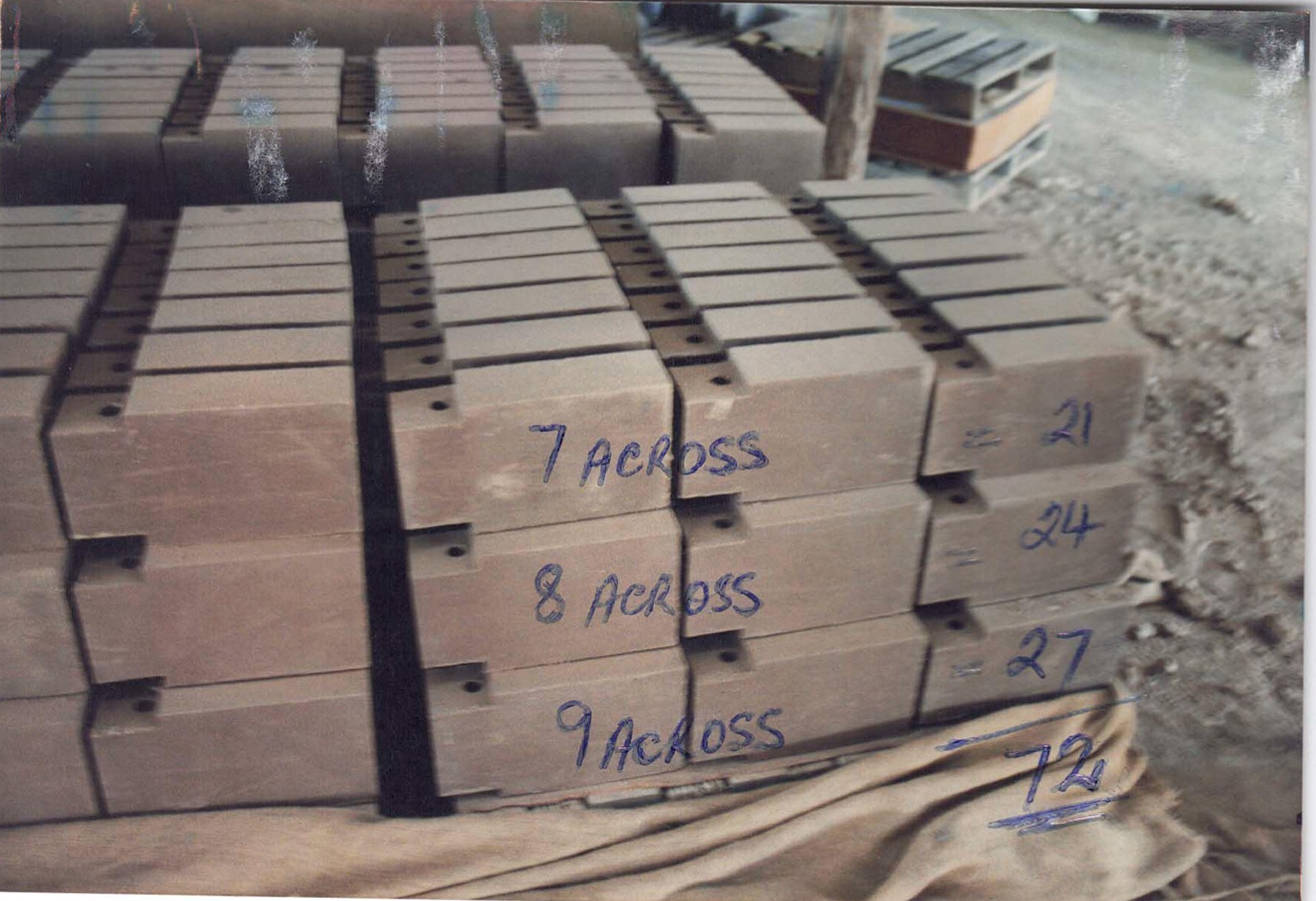
PHOTO DEMONSTRATING HOW ITEMS ARE TO BE STACKED IN PREPARATION FOR KILN FIRING.
Source: Green Make Register
Hampton
Register 1 One of items of paperwork found in the old buildings.
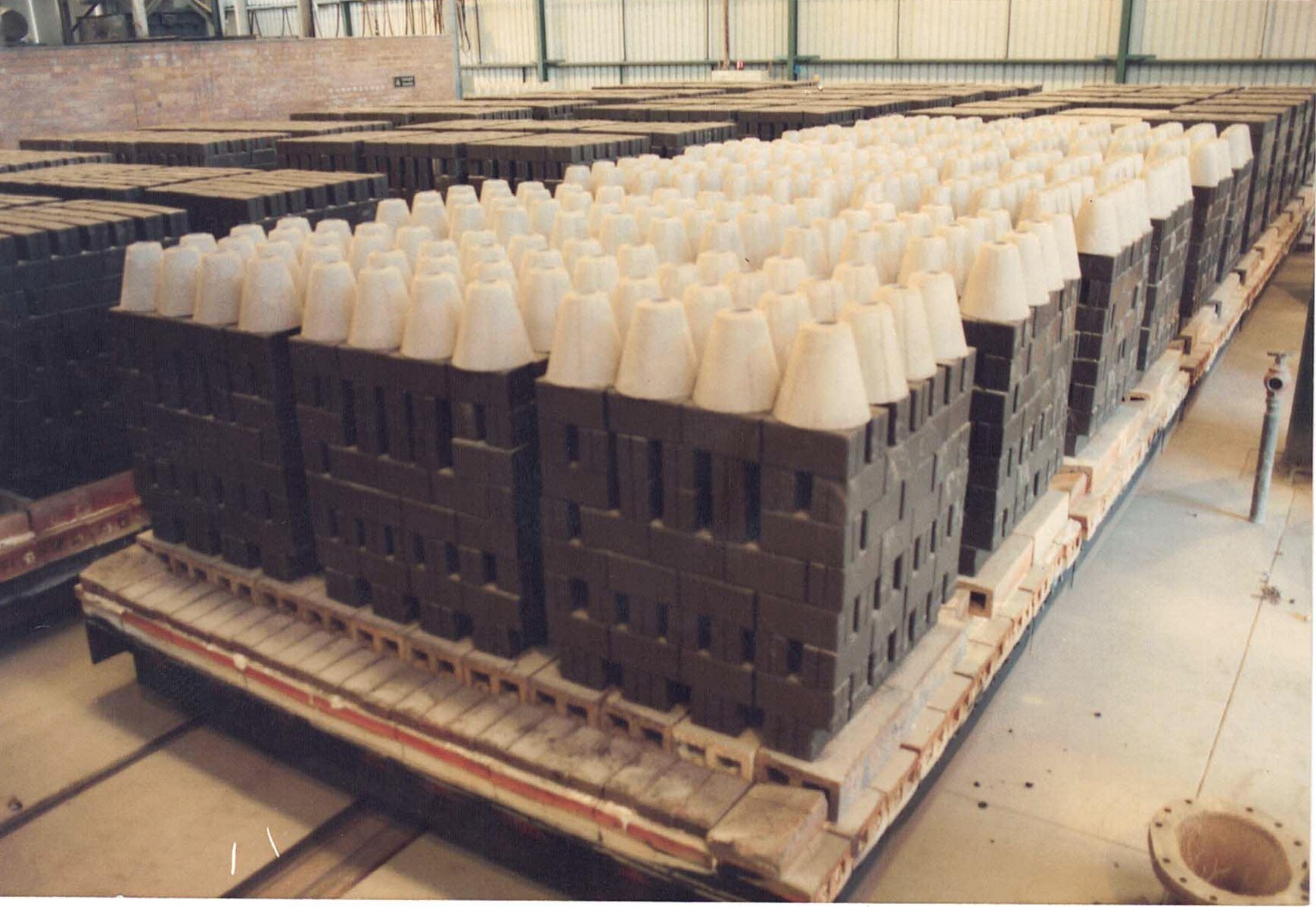
ANOTHER PHOTO OF HOW TO STACK PARTICULAR ITEMS.
In this case they are on an actual kiln car on tracks; probably after having excited from a kiln.
Green Make Register
Hampton
Register 1
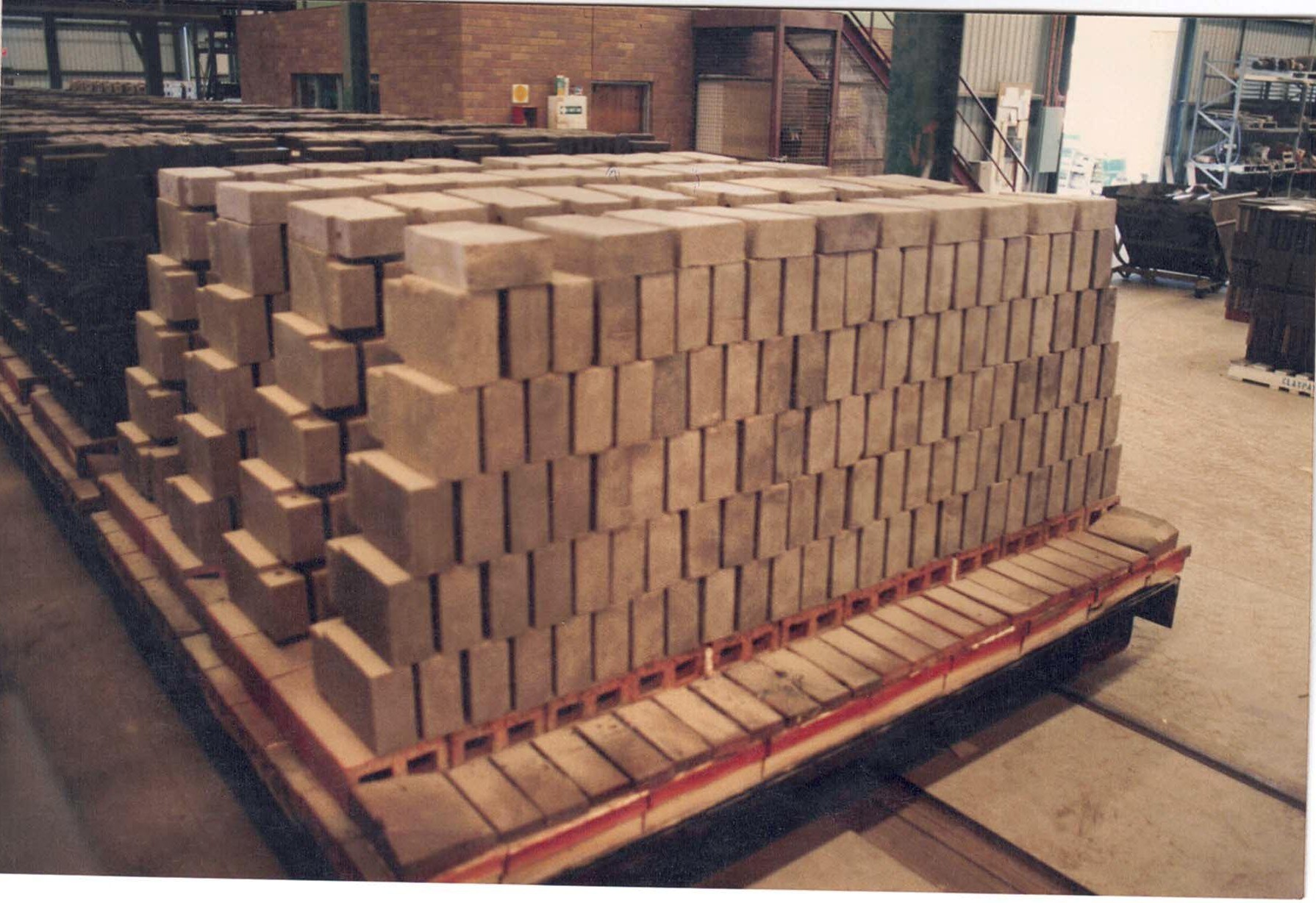
ANOTHER STACKED KILN CAR
Note the hollow bricks that form the base of the car.
Green Make Register
Hampton
Register 1
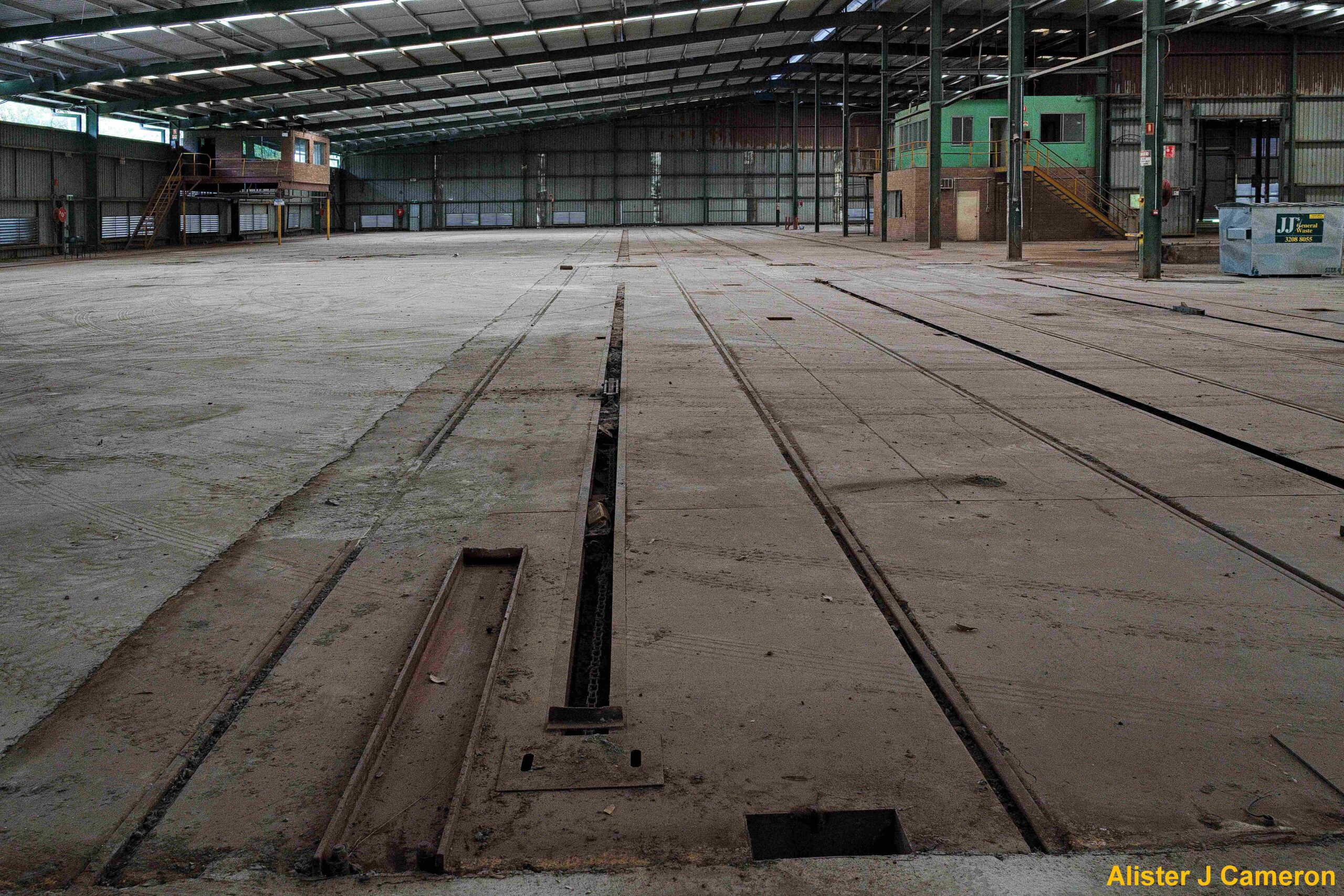
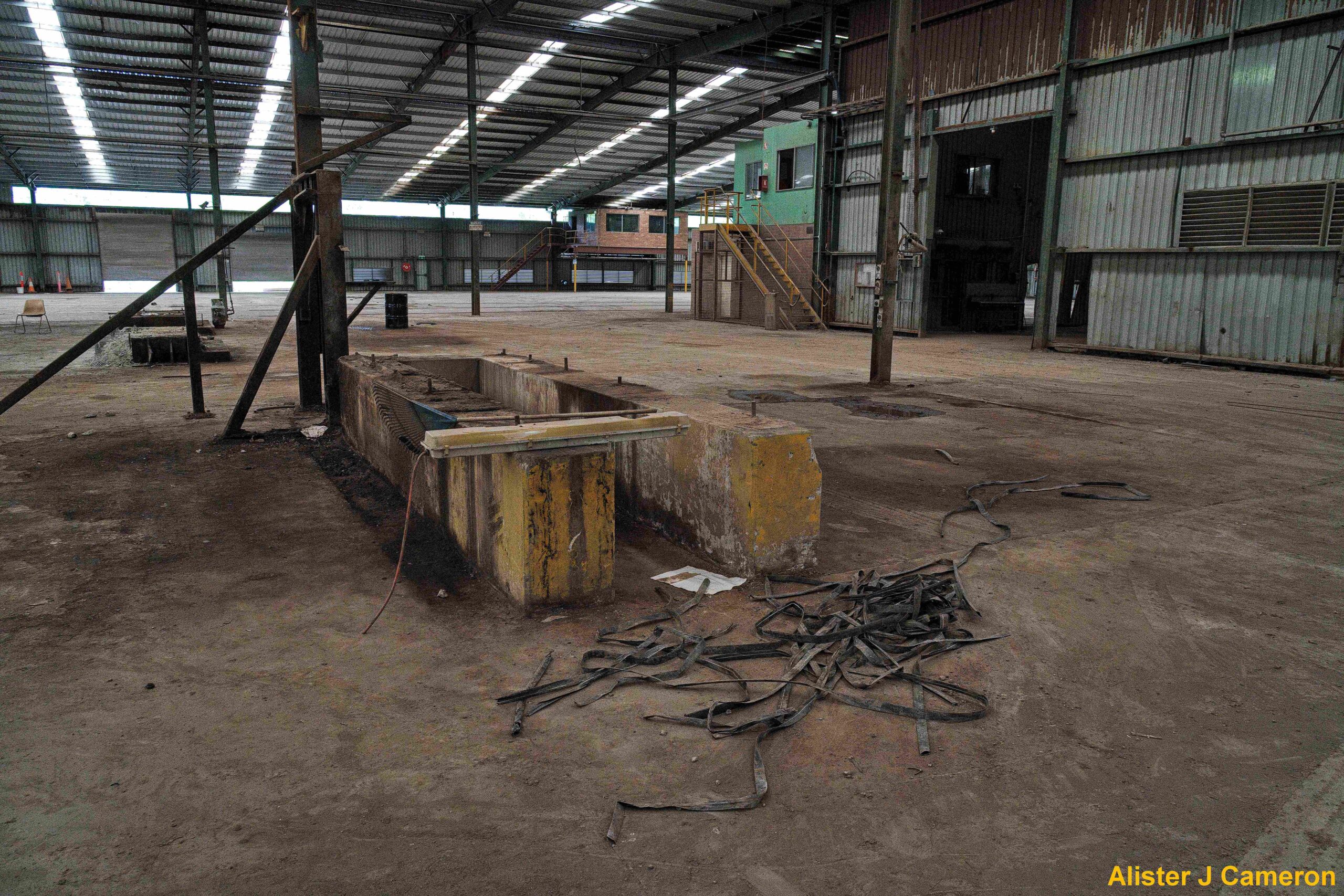
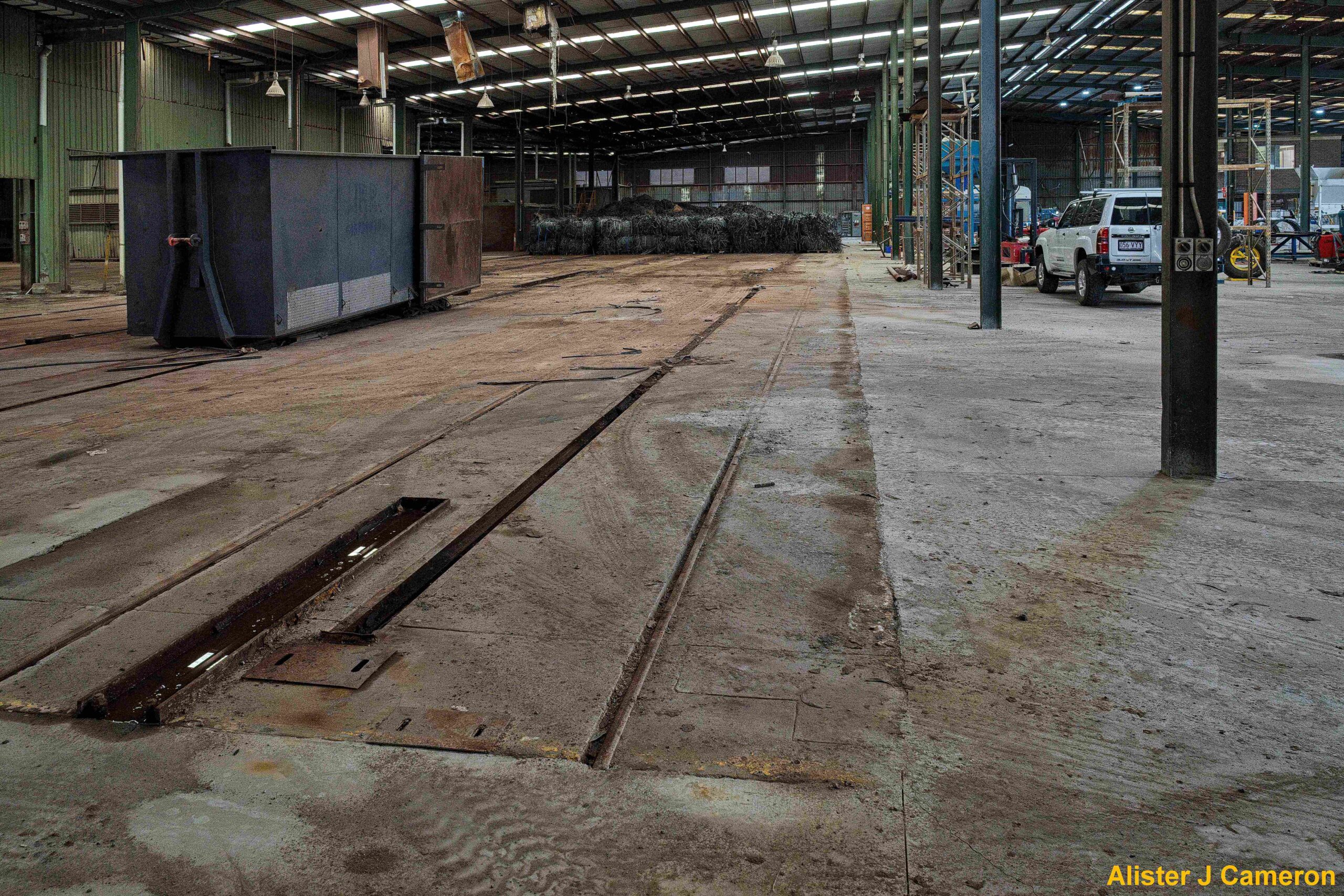
INSIDE THE EASTERN HALF OF THE KILN BUILDING. 2024
All that is left are the tracks used to move the kiln cars through the kilns.
On opposite sides are raised offices probably used to monitor the kiln processes.
Photo: Alister J Cameron
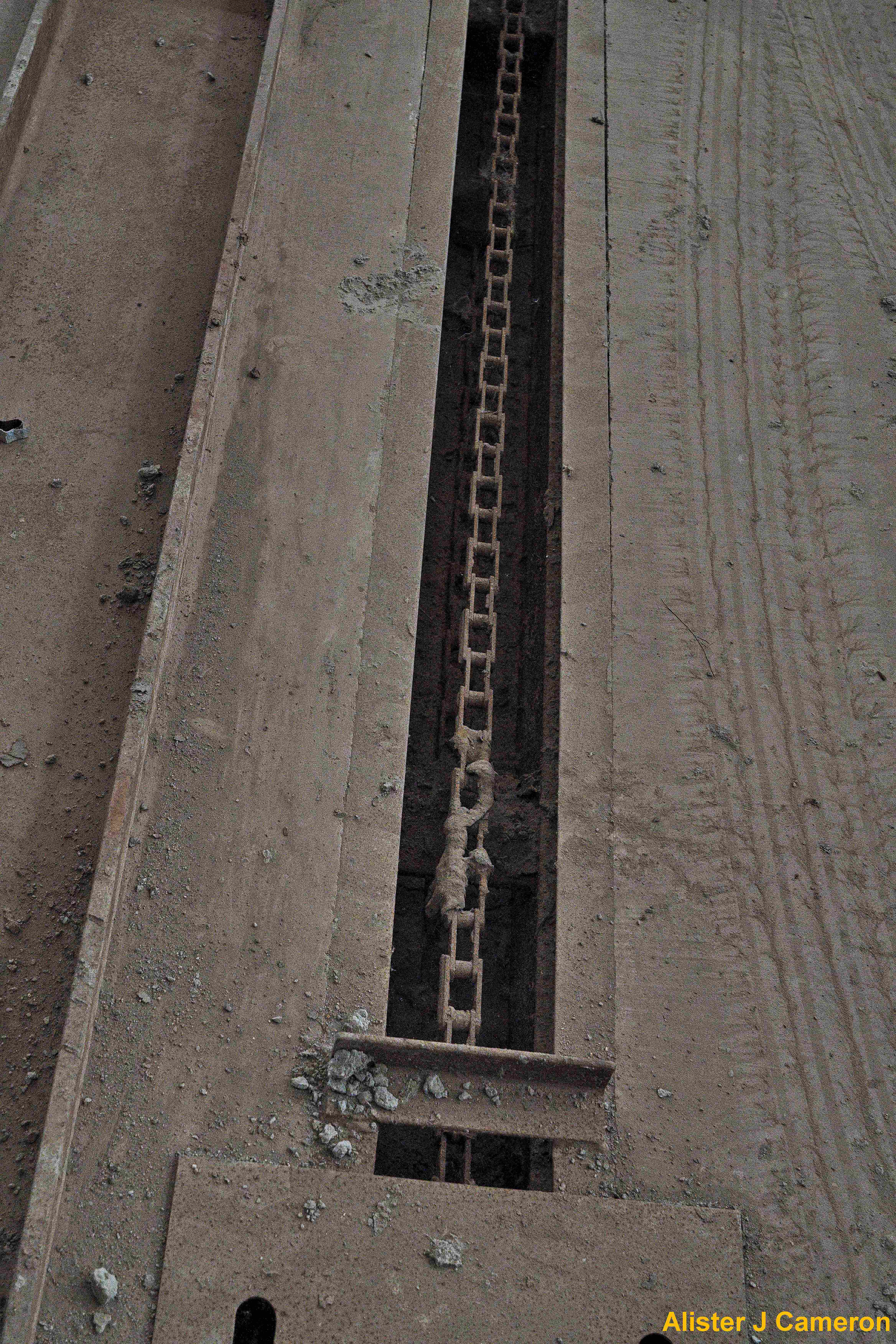
CLOSUP OF ONE OF THE TRACKS SHOWING A MOVABLE CHAIN 2024
Photo: Alister J Cameron
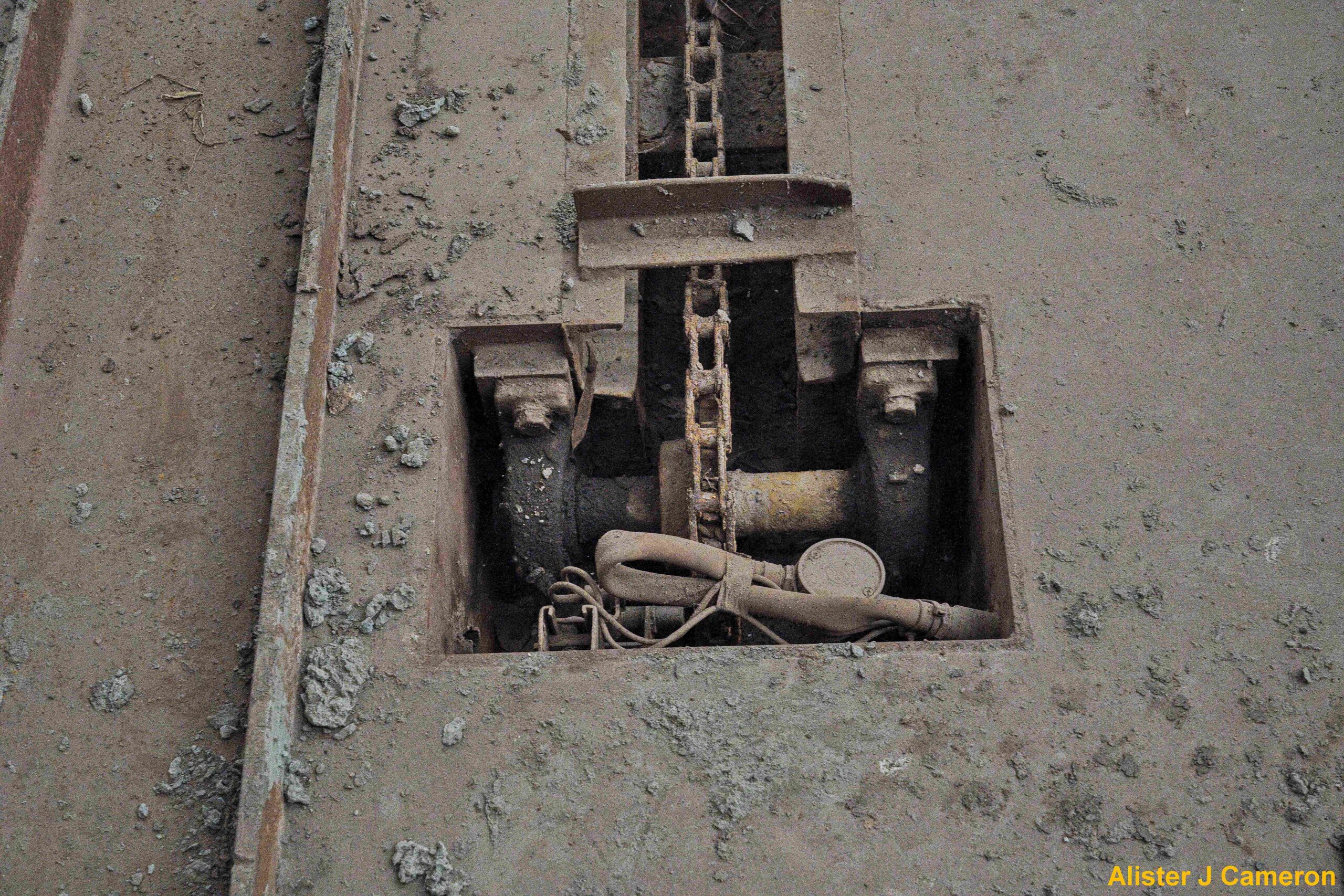
ON ONE END THE WHEELS DRIVING THE CHAIN CAN CLEARLY BE SEEN 2014
Photo: Alister J Cameron
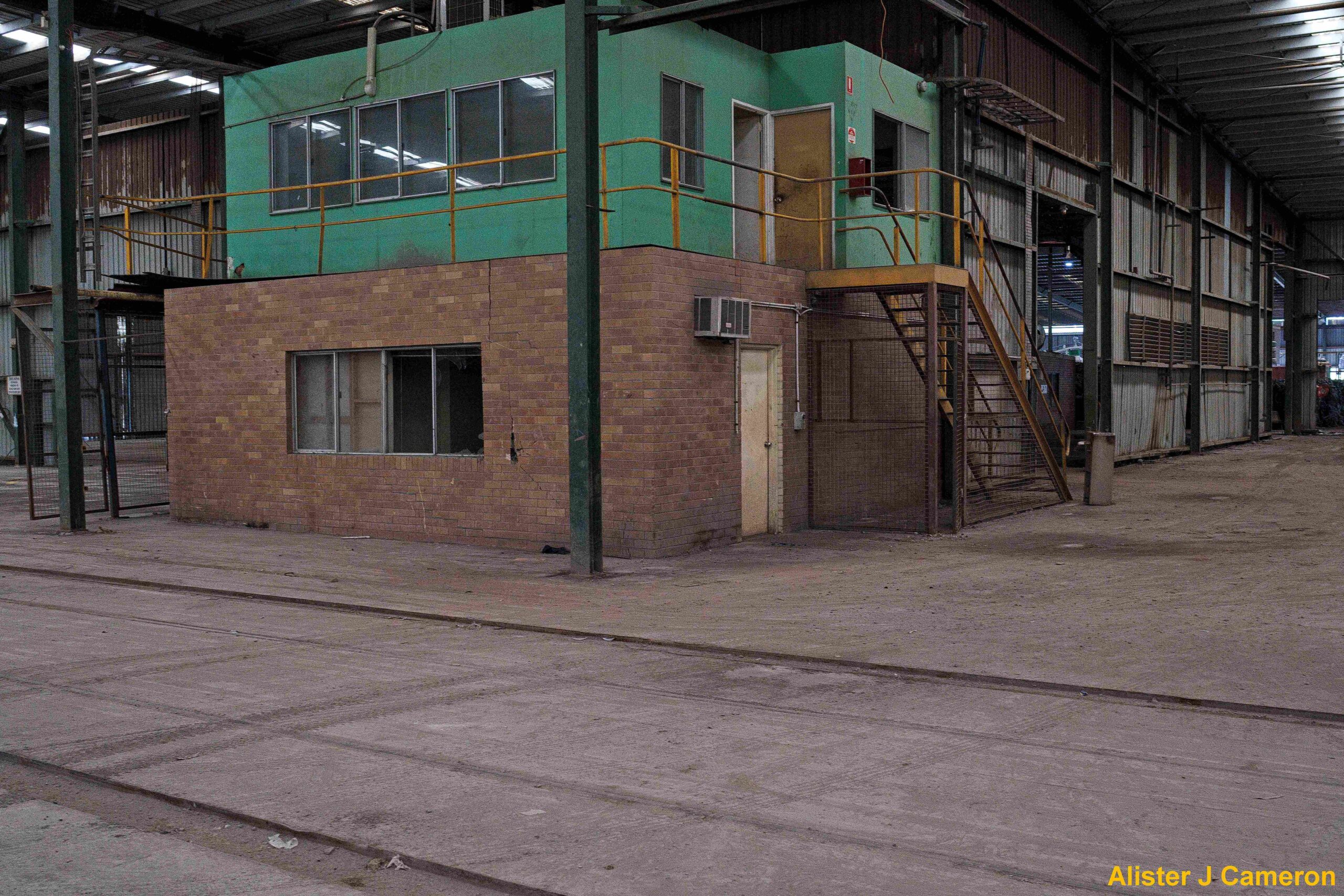
CLOSEUP OF ONE OF THE RAISED OFFICES 2024
Photo: Alister J Cameron
IN THE MIDDLE OF THE BUILDING IS WHAT LOOKS LIKE THE CONCRETE FOUNDATIONS OF A LARGE ENGINE 2024
Possibly it was the driing motor for the kiln operations.
Photo: Alister J Cameron
EASTERN HALF OF KILN BUILDING 2024
Already part of it is being utilized by a business.
The Shuttle Kiln
A Shuttle Kiln is a car-bottom kiln with a door on one or both ends. Burners are positioned top and bottom on each side, creating a turbulent circular air flow.
This type of kiln is generally a multi-car design and is used for processing whitewares, technical ceramics and refractories in batches. Depending upon the size of ware, shuttle kilns may be equipped with car-moving devices to transfer fired and unfired ware in and out of the kiln.
Shuttle kilns can be either updraft or downdraft.
A shuttle kiln derives its name from the fact that kiln cars can enter a shuttle kiln from either end of the kiln, whereas a tunnel kiln has flow in only one direction.
EXAMPLE OF A SHUTTLE KILN
Source: https://www.ceceramicfiber.com/
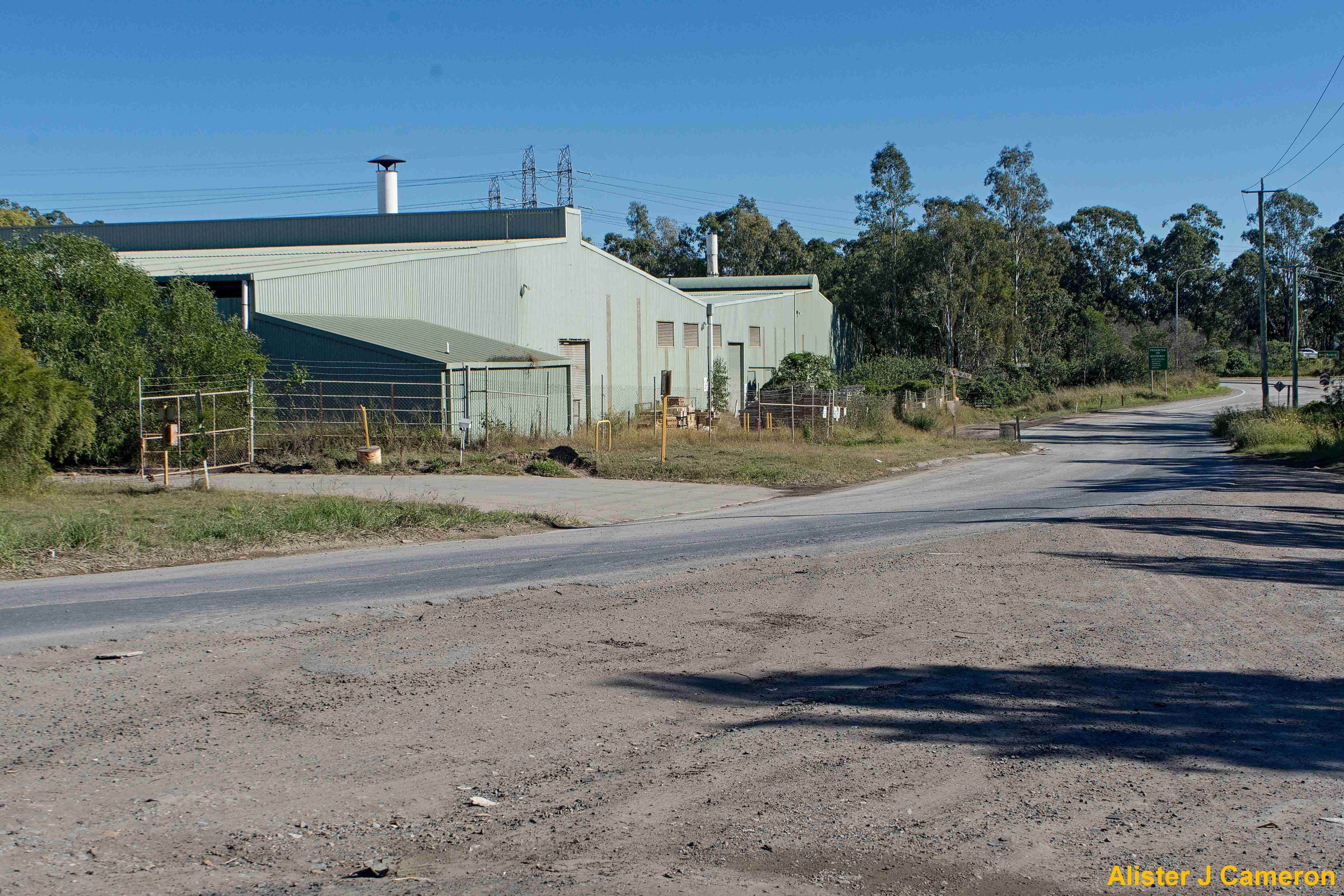
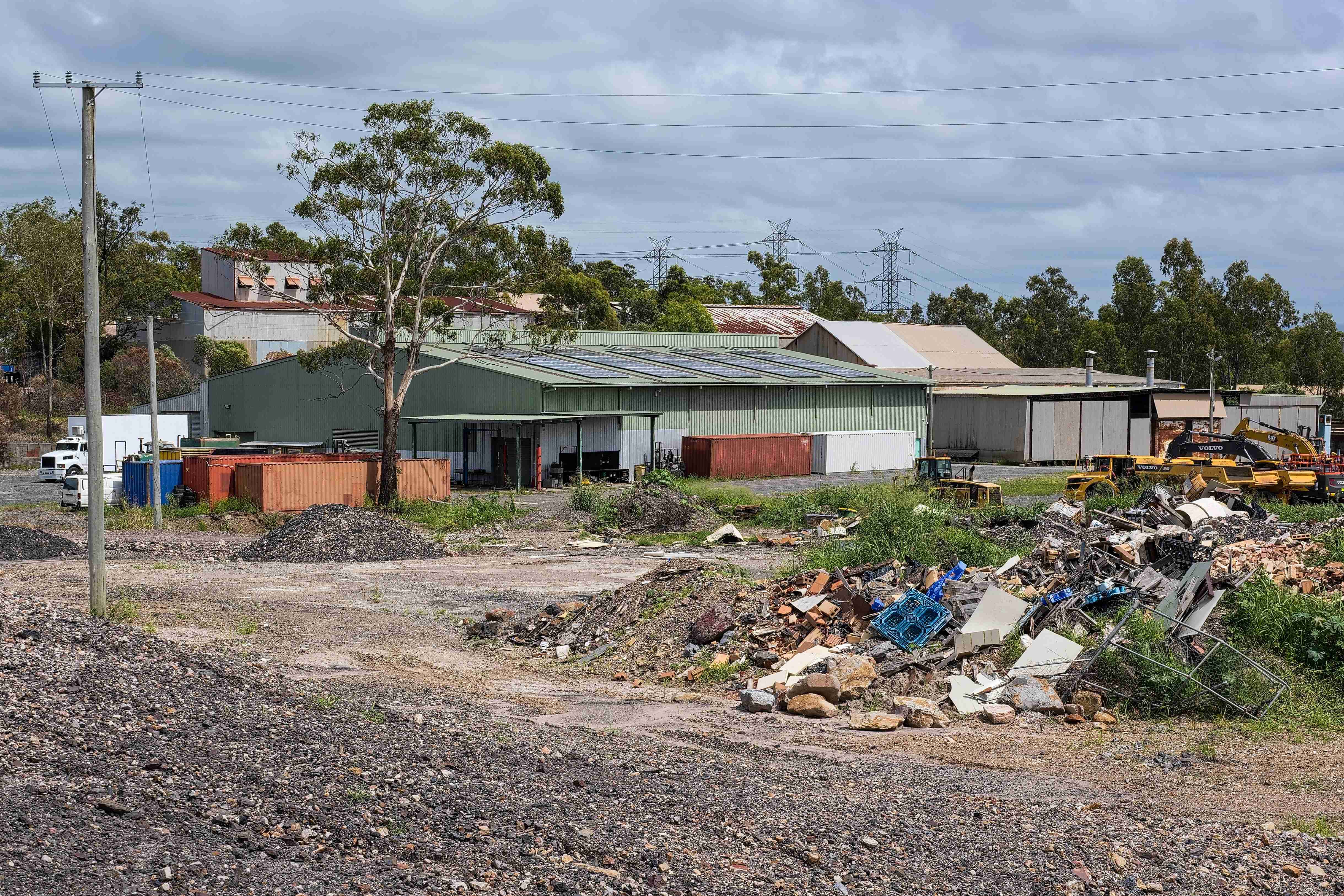
REAR OF SHUTTLE KILN (THE GREEN BUILDING) IN 2011 WHEN IT WAS STILL FULLY INTACT
Photo: Alister J Cameron
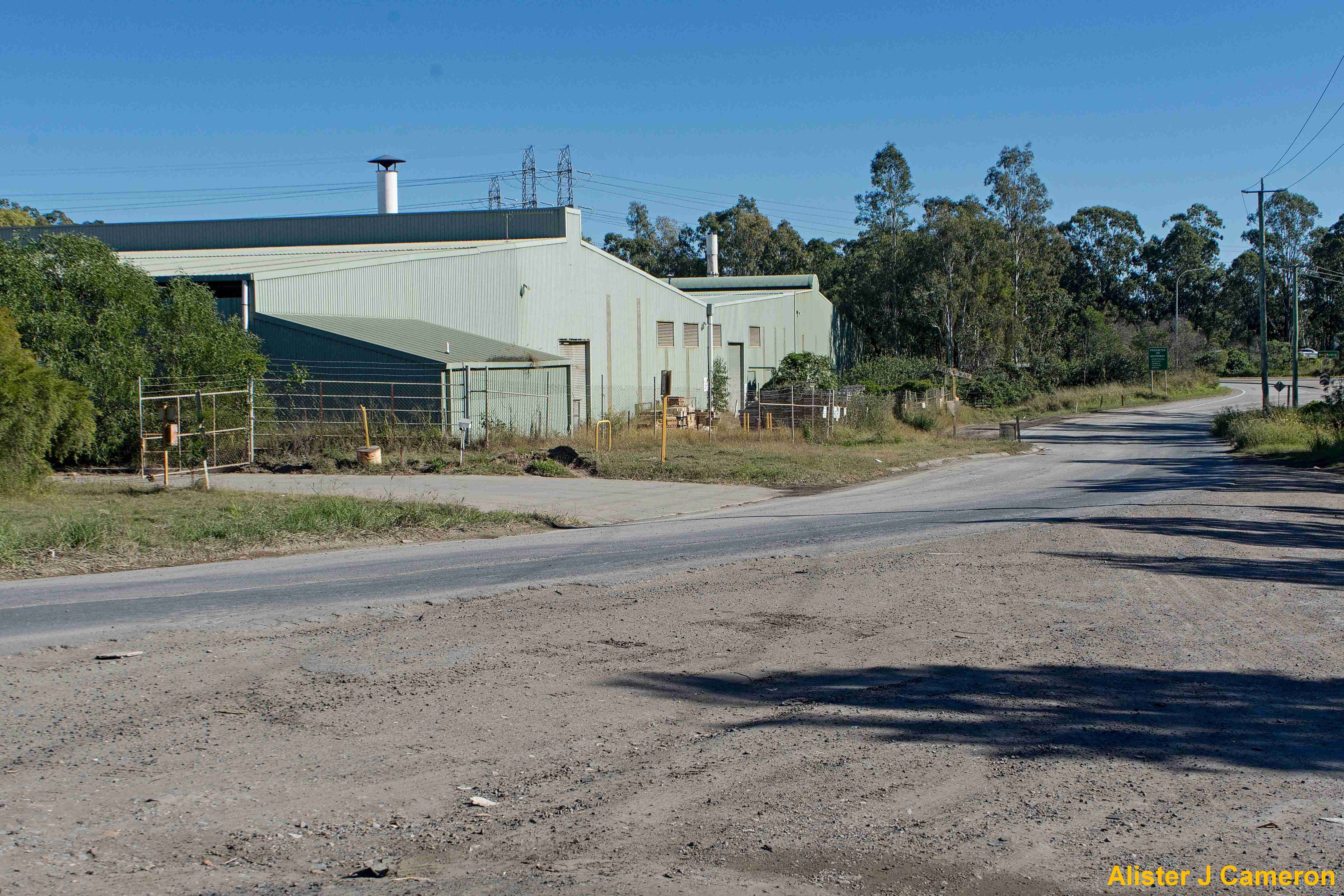
THE SHUTTLE KILN BUILDING VIEWED FROM THE NORTH-EAST IN 2021
The building is on the left and the former old kiln site is on the right. The former chimney has been removed
Photo: Alister J Cameron