BRICKWORKS & POTTERIES OF THE IPSWICH (Qld) REGION
Alister J Cameron
Petrie Bricks
Petrie & Son; John Petrie; John Petrie & Sons
History
After ‘apprenticeship’ in the family building and contracting business John Petrie assumed increasing responsibility for its management after his father’s blindness in 1848 forced him to retire. John became sole proprietor and the firm was changed from Petrie & Son to John Petrie. Petrie purchased the land that became his brickworks on the corner of Oriel and Sandgate Roads, Clayfield, on 31 May 1858 Deed of Grant 58/373 (ATS No.19509064). The brickworks can be seen on McKellar’s 1895 map of the area, Sheet 2.
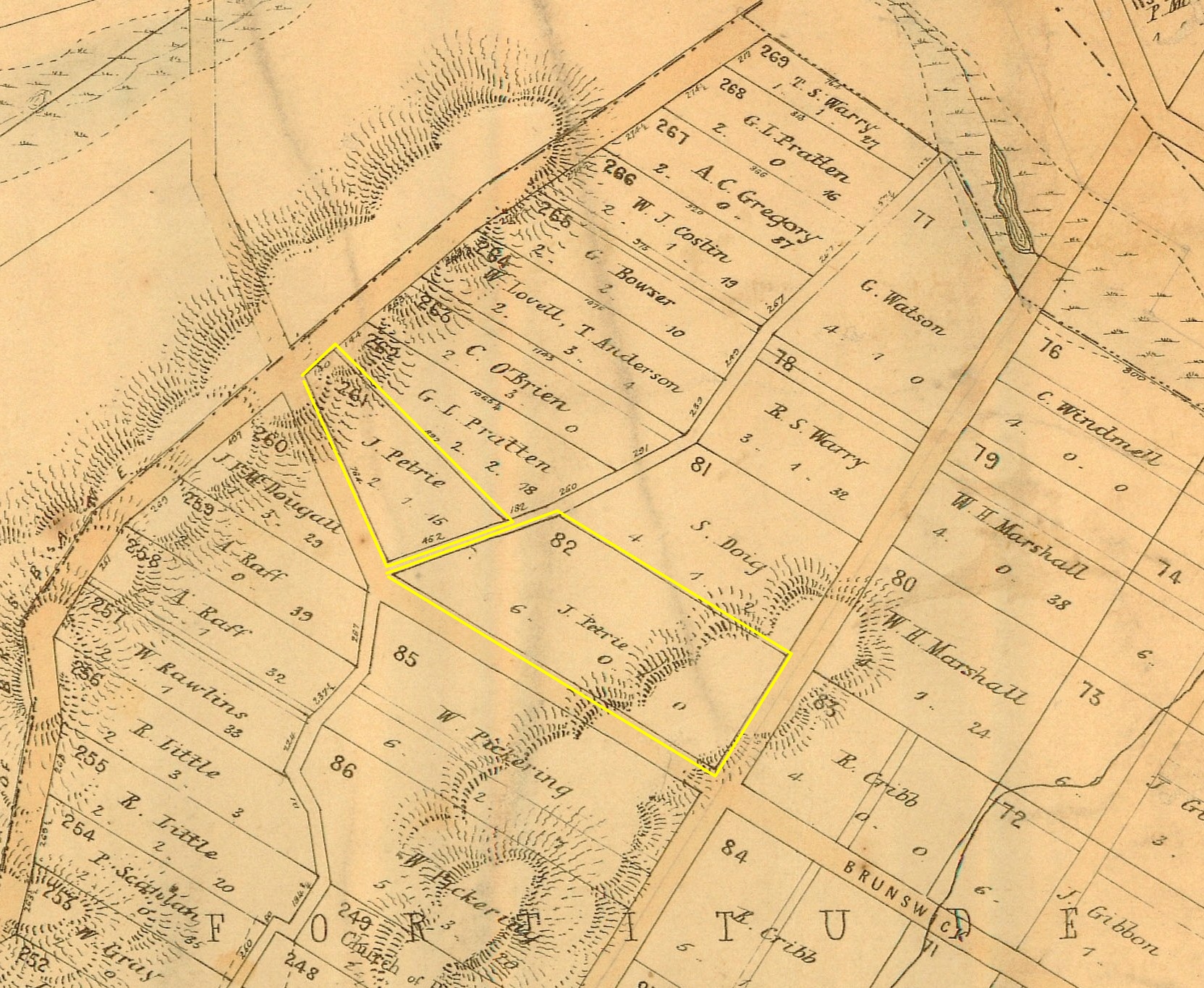
The enviable repute for fine workmanship under his father was sustained by John. His skill can still be seen in many buildings in Brisbane, but he lacked his father’s drive and business acumen. In 1860 Petrie opened a brickyard at the corner of Brunswick and Water Sts, Fortitude Valley. In 1882 Petrie’s son, Andrew Lang Petrie, became manager of the reconstructed firm, John Petrie & Son. The business was then centred on cabinet making and joinery, brick and tile making and monumental masonry. In 1884, Petrie was manufacturing bricks using the extrusion wire-cut process, as evidenced by a detailed account of his Albion operations in The Brisbane Courier. He also employed a Penfolds patent revolving machine press to form up to 5000 bricks per day.
By 1887 Petrie’s was producing bricks using the plastic manufacturing process resulting in bricks with circular marks on the top and bottom surfaces of the bricks, and denser bricks with sharper edges and smoother faces. In October 1890, Petrie and Sons discharged all workers at the brick and pottery works due to a downtown in trade. In 1892 John Campbell & Sons purchased Petrie’s brickyard. The Clay pit used by Campbell (originally Petrie’s) existed on corner of Sandgate Road and Oriel Roads, in today’s suburb of Clayfield. Petrie & Sons finally went bankrupt in 1894 during the depression but later revived but confined its operations to monumental masonry. The land which was once Petrie’s brickyards was sold for subdivision in 1915
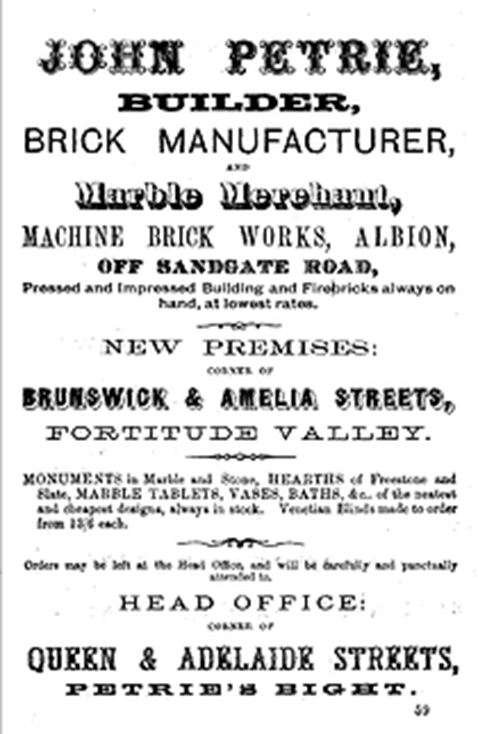
ADVERTISEMENT FOR JOHN PETRIE 1883
Note the two locations for the business.
Source: Facebook: House Histories "Virginia Bricks"
Location
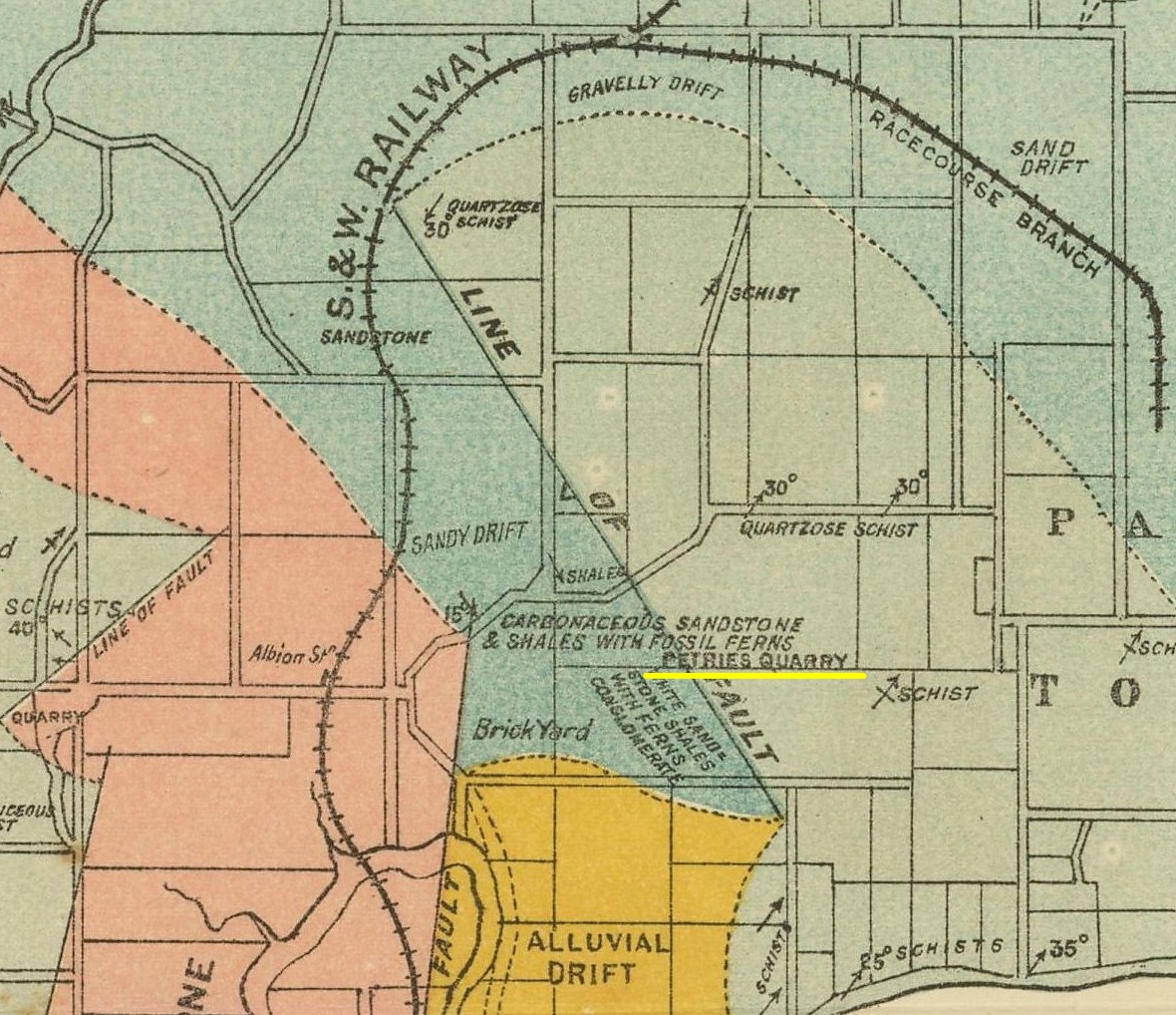
1887 MINING MAP OF THE BRICKYARD AREA
"Petrie's Quarry" refers to the clay pit which was later taken over by Campbell & Sons.
Source: cr 55191_2
"Geological Map of the City of Brisbane and its Environs
by William Rands
Assistant Government Geologist
1887
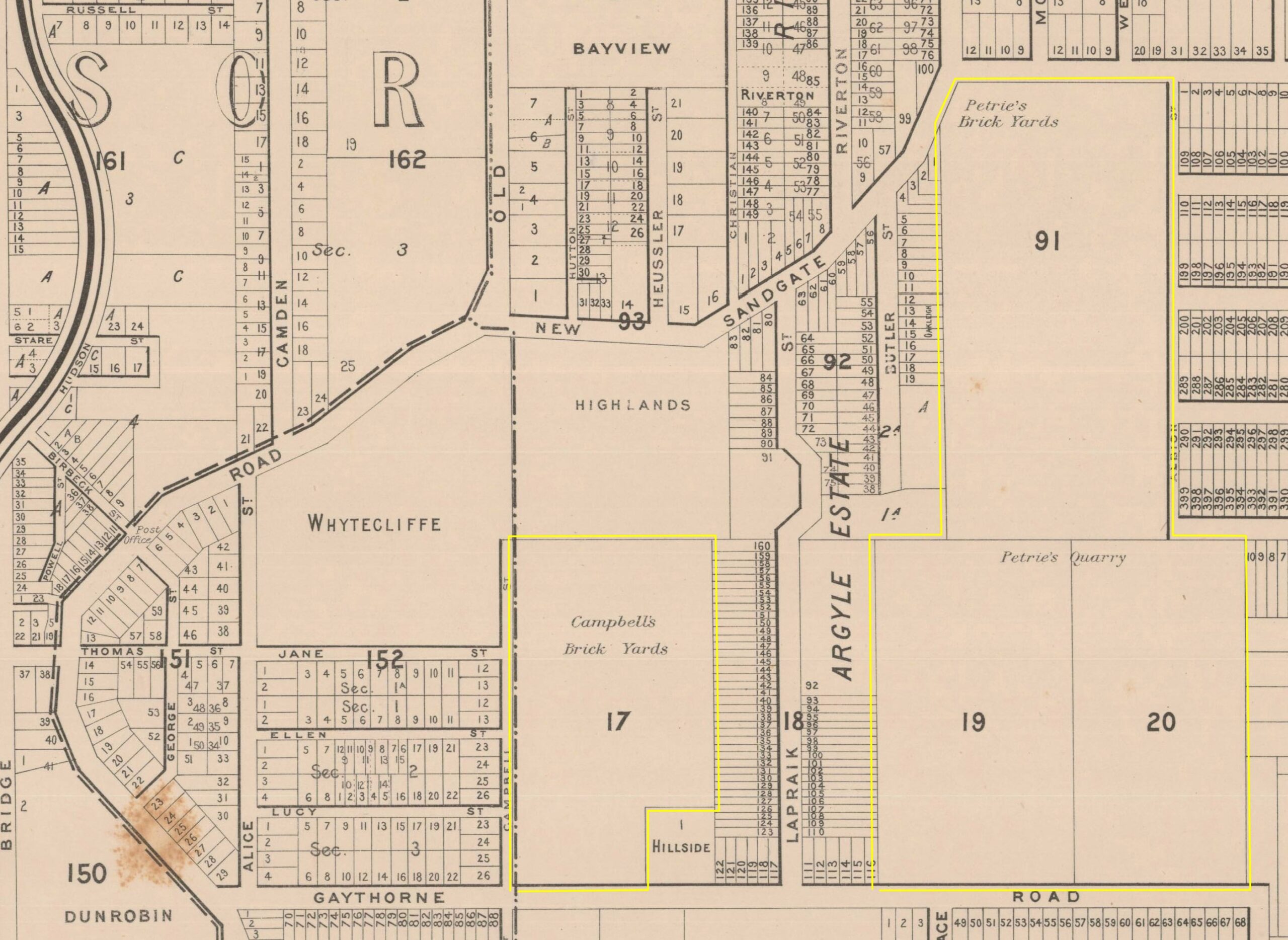
1895 MAP OF PETRIE'S PROPERTIES NEAR BREAKFAST CREEK.
By this time they were owned by Campbells.
Source: McKellar's Map, QSA Item ID 618803 SHEET 2 Parish of Windsor and Kedron 1895 DID26670
PETRIE'S PROPERTIES AT THE CORNER OF BRUNSWICK STREET & WATER STREETS, FORTITUDE VALLEY 1878
Source: Plan of Brisbane Valley Drainage, Brisbane City Council.
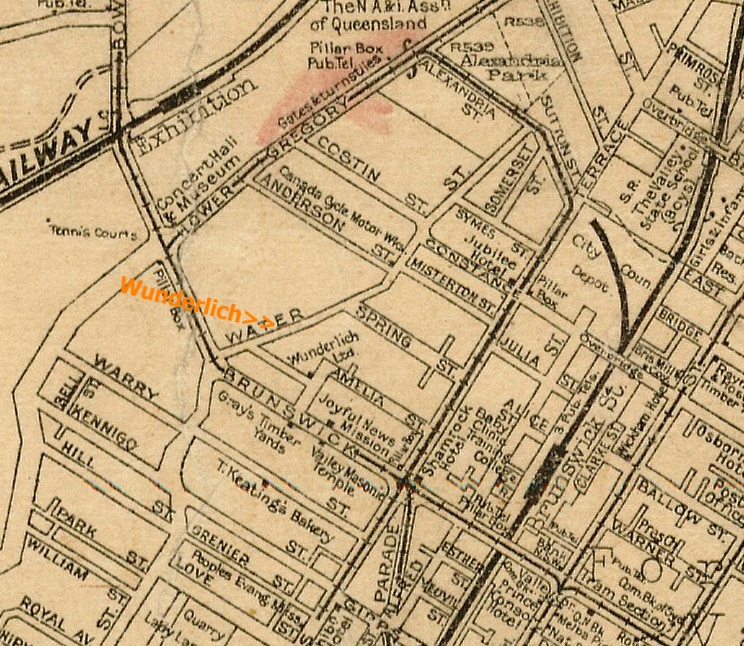
MAP OF THE FORMER PETRIE FORTITUDE VALLEY PROPERTIES IN 1931.
It would appear that at least some of that area is now occupied by Wunderlich. This company was known for its pressed metal ceilings, metal shop fronts, and terra cotta tiles and cladding, popular in Australia during the late 19th and early 20th centuries.
Source: Map of Brisbane Flood Levels, Brisbane City Council.
Petrie Bricks Found in Ipswich Area
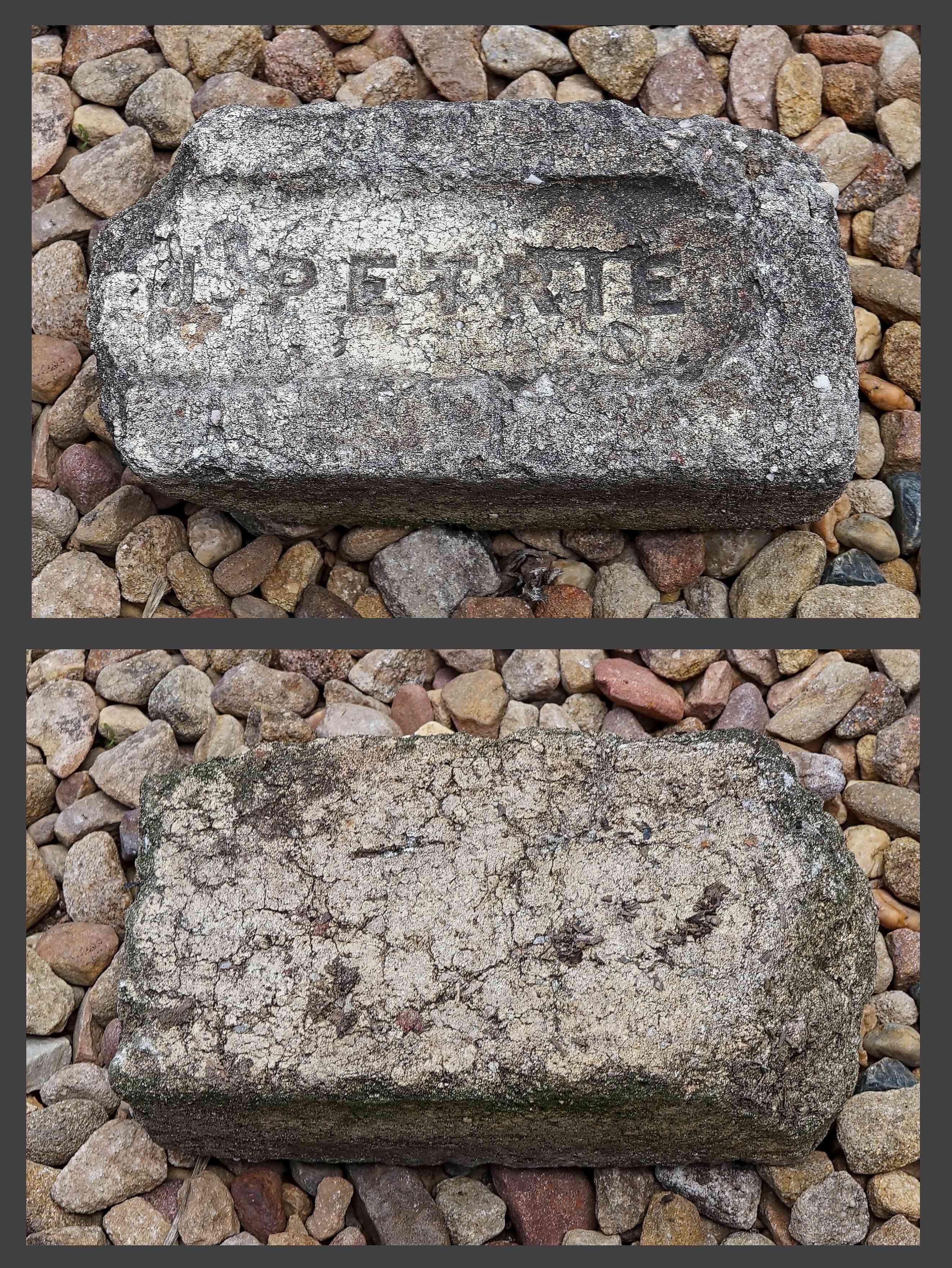
Description: White, Grainy, Weathered Brick. Condition: Extremely crumbled. Type: Fire (Kiln) Brick. Frog: Shallow, flat frog with rounded edges. Inscription: “J. PETRIE” Origin: Donnybrook Colliery site, Tivoli. Current Location: My Collection.
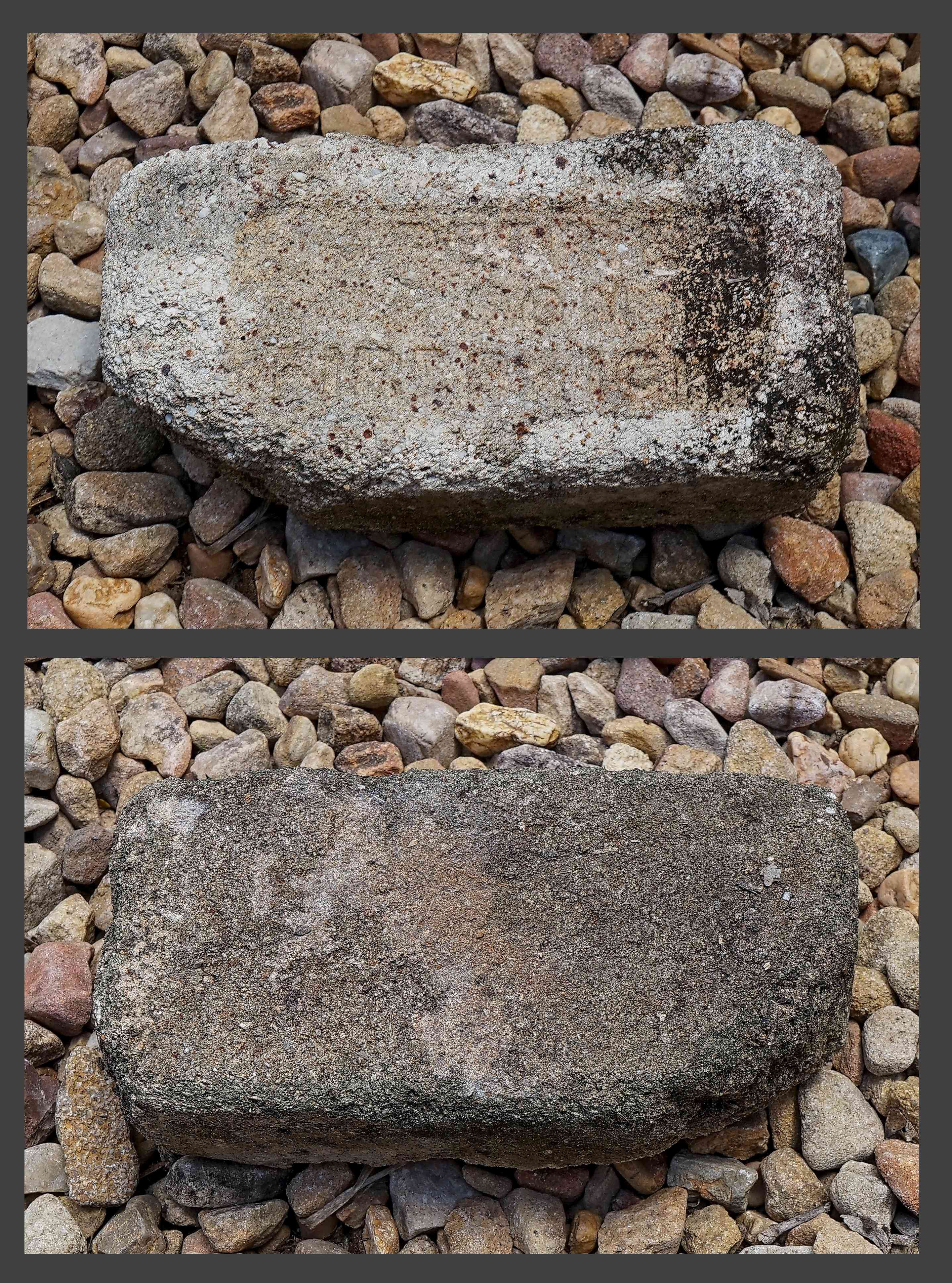
Description: White, Grainy, Weathered Brick. Condition: Extremely crumbled. Type: Fire (Kiln) Brick. Frog: Shallow, flat frog with rounded edges. Inscription: “J. PETRIE & SON”. Origin: Donnybrook Colliery site, Tivoli. Current Location: My Collection.
Petrie Bricks from Elsewhere
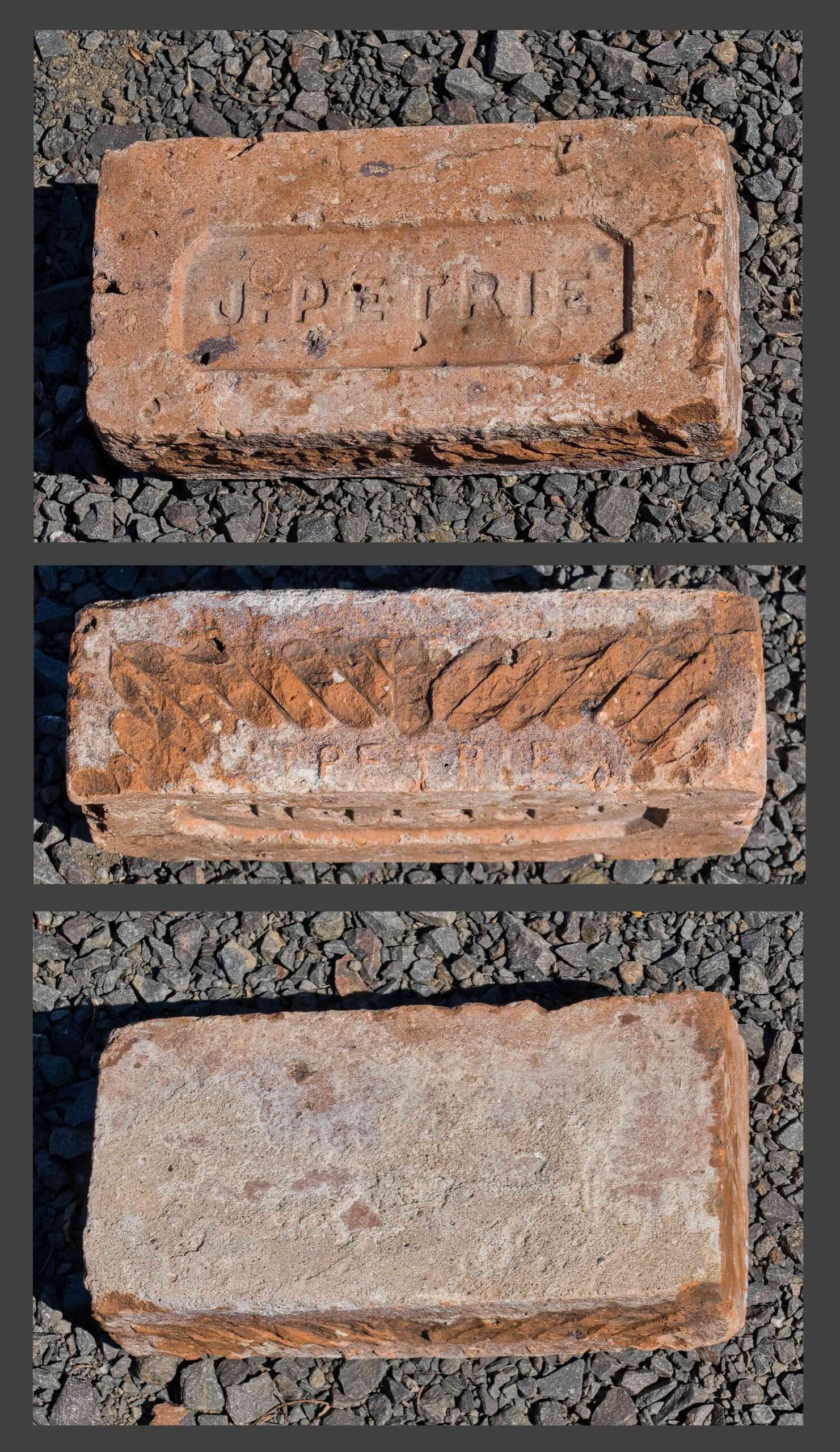
Description: Orange Brick. A few black blotches. Ornate pattern and inscription one side edge. Condition: Much crumbling and some fissures. Type: House Brick. Frog: Shallow, rectangular frog with angular corners. Inscription: “J. PETRIE” indented. Two small offset circles within frog. “PETRIE” on one edge face. Origin: Brisbane area. Current Location: My collection.
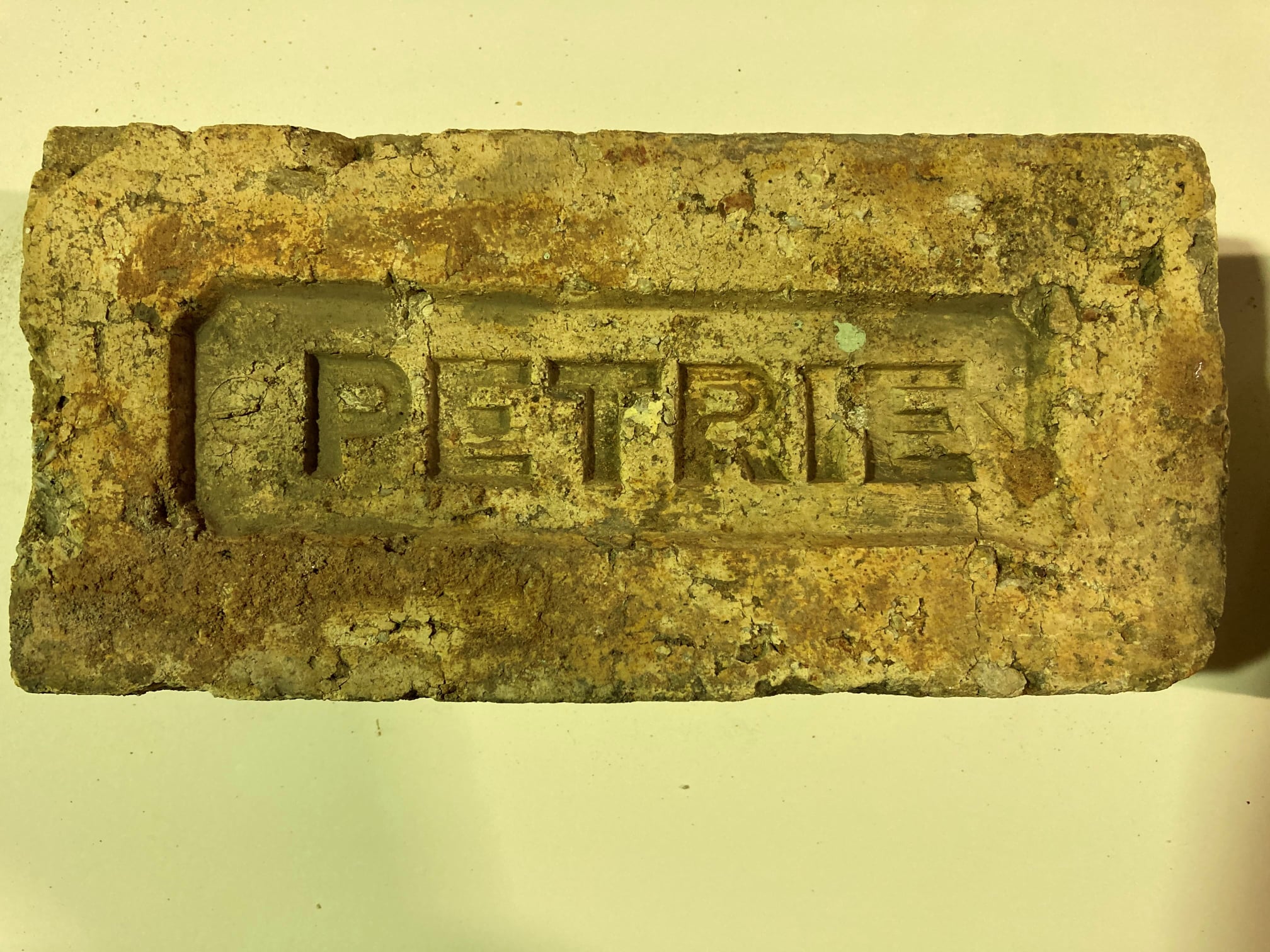
Description: Light-Coloured Brick. Condition: Crumbling and fine fissures. Type: House or Fire Brick Frog: Shallow, rectangular frog with angular corners. Inscription: “PETRIE” Origin: Unknown. Current Location: Unknown.